

Bakeshop Skills Class: Buttercream Types and Cake Decorating Techniques
Because much of the class time was devoted to hands-on work, I combined both weeks into one post. The lecture covered four common types of frosting: American buttercream, Swiss meringue buttercream, Italian meringue buttercream and cream cheese frosting.
American Buttercream
American buttercream is generally made by combining powdered sugar with butter or shortening, along with a small amount of milk or another liquid. The ingredients are mixed with a paddle attachment until smooth.
This style of frosting is sweet, heavy and easy to prepare. It works well for basic cake frosting and simple decorations, although it is denser than meringue-based buttercreams.
Butter produces a cleaner flavor and melts readily in the mouth. Shortening has a higher melting point, so frosting made with shortening can leave a waxy or greasy sensation.
Swiss Meringue Buttercream
Swiss meringue buttercream begins by heating egg whites and sugar together over a bain-marie, or water bath. The mixture is whisked as it warms so the sugar dissolves and the egg whites heat evenly.
The heated mixture is then whipped at high speed until it forms a glossy meringue and cools to room temperature. Softened butter is added gradually, followed by vanilla, chocolate, coffee or another flavoring.
Swiss meringue buttercream is smooth, light and less sweet than American buttercream. It spreads evenly and is well suited to piping and finishing layer cakes.
Italian Meringue Buttercream
Italian meringue buttercream is made by pouring hot sugar syrup into partially whipped egg whites while the mixer is running. The mixture is then whipped until the meringue cools before softened butter and flavorings are added.
This method produces a stable, smooth buttercream, but it requires careful temperature control and precise handling of the hot syrup.
The syrup should be poured in a slow, steady stream between the whisk and the side of the bowl. Pouring it directly onto the whisk can cause the syrup to splatter and harden against the bowl.
Cream Cheese Frosting
Cream cheese frosting is usually made by mixing softened butter and cream cheese with a paddle attachment at low speed. Once the mixture is smooth, flavorings or melted chocolate can be added, followed by powdered sugar.
Mixing at high speed incorporates more air, making the frosting lighter in color and texture. For a smooth, dense finish, low-speed mixing is generally preferable.
Overmixing can also soften cream cheese frosting, particularly if the ingredients become too warm.
Comparing the Four Frostings
| Frosting | Main Method | Texture | Best Uses |
|---|---|---|---|
| American buttercream | Butter or shortening mixed with powdered sugar | Sweet, dense and firm | Simple frosting and basic piping |
| Swiss meringue buttercream | Heated egg whites and sugar whipped with butter | Silky, light and smooth | Layer cakes, smooth finishes and detailed piping |
| Italian meringue buttercream | Hot sugar syrup whipped into egg whites, then combined with butter | Stable, smooth and light | Professional cake finishing and warm environments |
| Cream cheese frosting | Cream cheese and butter mixed with powdered sugar | Rich, tangy and soft | Carrot cake, red velvet cake and spice cakes |
Heating Egg Whites Safely
When making Swiss meringue buttercream, the egg whites and sugar are heated together over a water bath. The mixture should be stirred or whisked continuously so it heats evenly and does not cook against the bowl.
The sugar should be fully dissolved before the mixture is whipped. Rub a small amount between your fingers. It should feel smooth rather than grainy.
The exact heating temperature depends on the formula and food-safety procedure being followed. A thermometer should be used rather than relying on appearance alone.
Working with Meringue Buttercream
The temperature of the butter and meringue is critical when making Swiss or Italian buttercream. If the butter is too cold, the mixture can look curdled. If it is too warm, the buttercream may become soft or soupy.
A curdled buttercream often needs additional mixing or gentle warming. A buttercream that is too warm can usually be corrected by chilling it briefly and mixing again.
Once properly emulsified, the buttercream should appear smooth, glossy and uniform.
Layering and Filling Cakes
In the kitchen, we practiced using a rotating cake stand to divide cakes into even horizontal layers.
A long serrated knife helps create level layers. The cake should be completely cool before slicing, and chilling it briefly can make a soft cake easier to handle.
After cutting, each layer can be filled with buttercream, pastry cream, ganache or another filling. Even filling thickness is important so the assembled cake remains level.
Applying a Crumb Coat
A crumb coat is a thin preliminary layer of frosting applied to the top and sides of a cake. It traps loose crumbs and creates a smooth base for the final coat.
After applying the crumb coat, the cake is chilled until the frosting firms. The final layer can then be applied without pulling dark crumbs into the visible surface.
Basic Piping Techniques
We also practiced several piping methods using pastry bags and decorating tips.
Consistent pressure is essential for creating even borders, shells, rosettes and lines. The dominant hand controls the pressure on the bag while the other hand guides the tip.
The piping tip should remain at a consistent angle and distance from the cake. Uneven pressure or changing the angle can produce decorations that vary in size and shape.
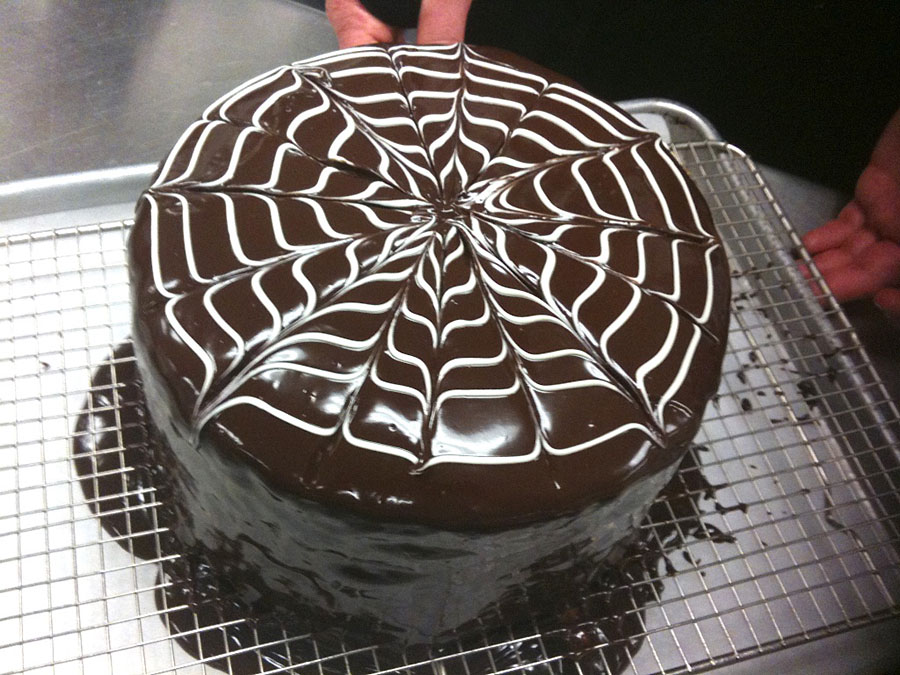
What We Made

Buttercream and Cake Decorating FAQs
What is the difference between American and Swiss buttercream?
American buttercream is made by mixing butter with powdered sugar. Swiss buttercream is made by heating egg whites and sugar, whipping them into a meringue and then adding butter. Swiss buttercream is generally smoother, lighter and less sweet.
What is the difference between Swiss and Italian buttercream?
Swiss buttercream heats the egg whites and sugar together over a water bath. Italian buttercream uses hot sugar syrup poured into whipped egg whites. Italian buttercream is generally considered more stable but requires more precise technique.
Which buttercream is easiest for beginners?
American buttercream is the simplest because it does not require cooking. Swiss meringue buttercream is usually the easier of the two meringue-based buttercreams.
Which buttercream is best for piping?
Swiss and Italian meringue buttercreams pipe smoothly and hold detailed shapes well when prepared at the correct consistency. American buttercream also pipes well but is heavier and sweeter.
Why does frosting made with shortening feel waxy?
Shortening melts at a higher temperature than butter. It may not melt completely at body temperature, which can leave a coating or waxy sensation in the mouth.
Why did my buttercream curdle?
The butter and meringue were probably at different temperatures. Continue mixing if the mixture is only slightly cool, or gently warm the bowl while beating.
Why is my buttercream runny?
The buttercream may be too warm or the butter may have softened excessively. Refrigerate it briefly, then beat it again until smooth and firm.
Why is my cream cheese frosting too soft?
The ingredients may be too warm, the frosting may have been overmixed or too much liquid may have been added. Chill it before using and mix at low speed.
What is a crumb coat?
A crumb coat is a thin layer of frosting that traps loose crumbs. It is chilled before the final coat is applied.
How do I cut a cake into even layers?
Cool the cake completely, place it on a rotating cake stand and use a long serrated knife. Rotate the cake while gradually cutting inward at the same height.
Should cake layers be chilled before decorating?
Briefly chilled cake layers are often easier to cut, fill and frost because they produce fewer crumbs and are less likely to tear.
How should buttercream cakes be stored?
Storage depends on the ingredients and room temperature. Cakes filled with pastry cream, cream cheese frosting or other perishable fillings should be refrigerated.


 Jeff’s Baking Blog