

Homemade Marzipan
Marzipan is a smooth almond confection made from finely ground almonds and sugar. It can be used as a filling, rolled over cakes, shaped into decorations or eaten on its own as candy.
When I lived in Norway, I would sometimes eat marzipan straight from the tube-shaped packages sold in grocery stores. Scandinavian countries also have a tradition of serving marzipan pigs during the holidays.
One custom involves hiding a single almond in a bowl of rice pudding. The person who finds the almond wins a marzipan pig. The pig traditionally symbolizes prosperity because livestock once represented a family’s wealth.
Ways to Use Marzipan
Marzipan is flexible enough to be rolled, cut, molded, colored and shaped. It can be used for cake coverings, molded figures, miniature fruit, candy and decorative accents.
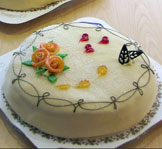

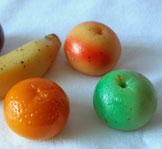

Rather than explain how to make marzipan every time it appears in another recipe, this post serves as the master recipe.
The process is straightforward when you have a food processor and stand mixer. Prepared marzipan is also available in the baking aisle of many grocery stores.
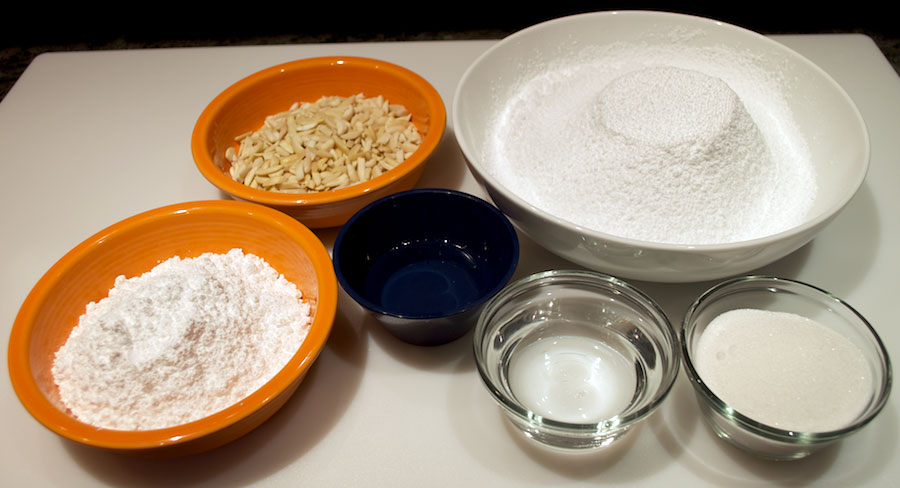
The complete recipe and detailed instructions are at the end of this post. You will need granulated sugar, water, dry blanched almonds, powdered sugar and light corn syrup.
Make the Simple Syrup
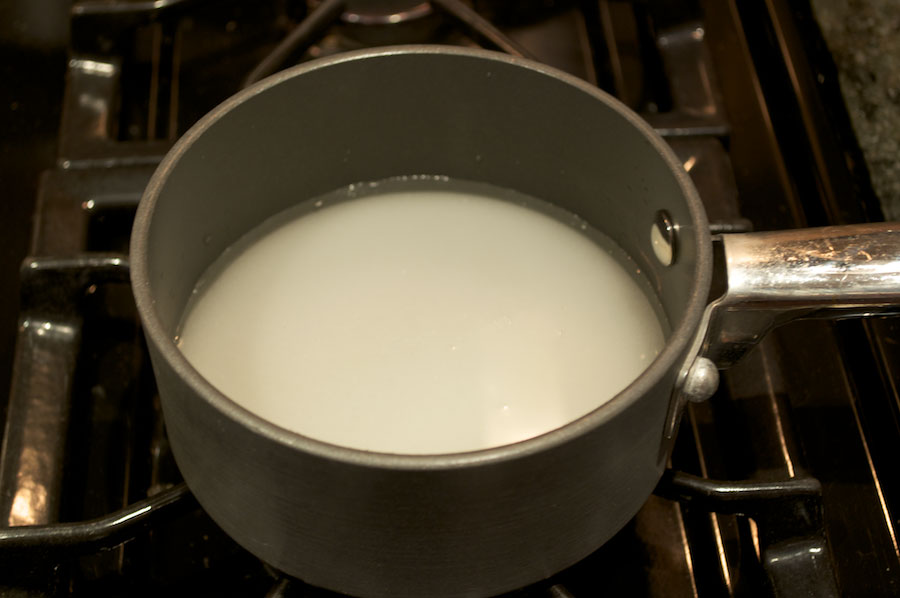
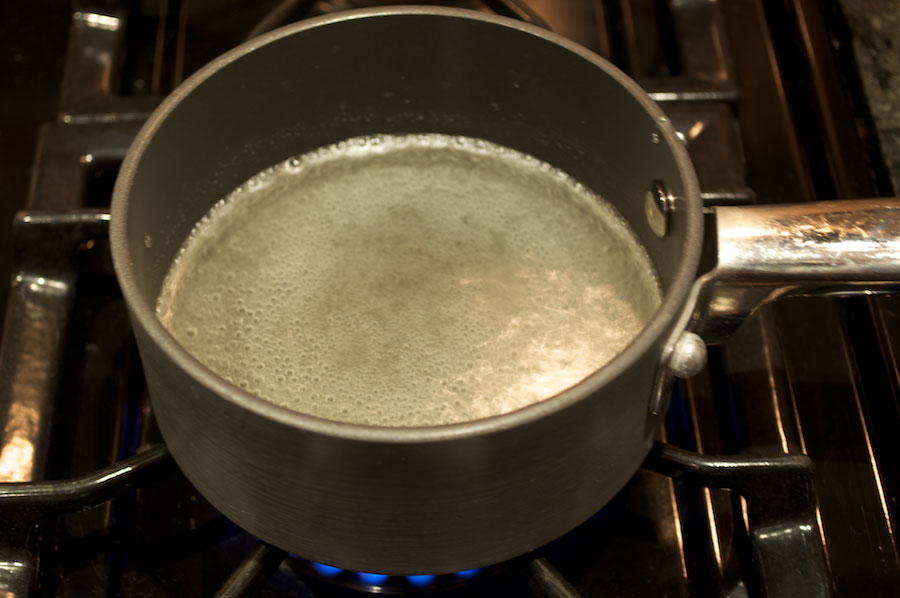
Combine the water and granulated sugar in a small saucepan. Bring the mixture to a boil and let it boil for approximately 30 seconds.
Remove the syrup from the heat and let it cool to room temperature or until barely warm.
Avoid boiling it longer than necessary because extended cooking reduces the water content and creates a more concentrated syrup.
Grind the Almonds
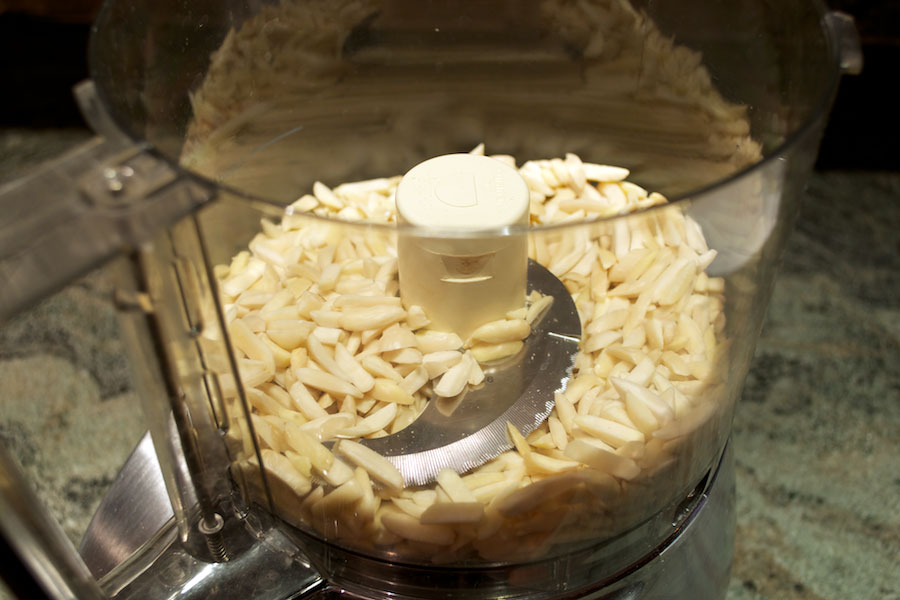
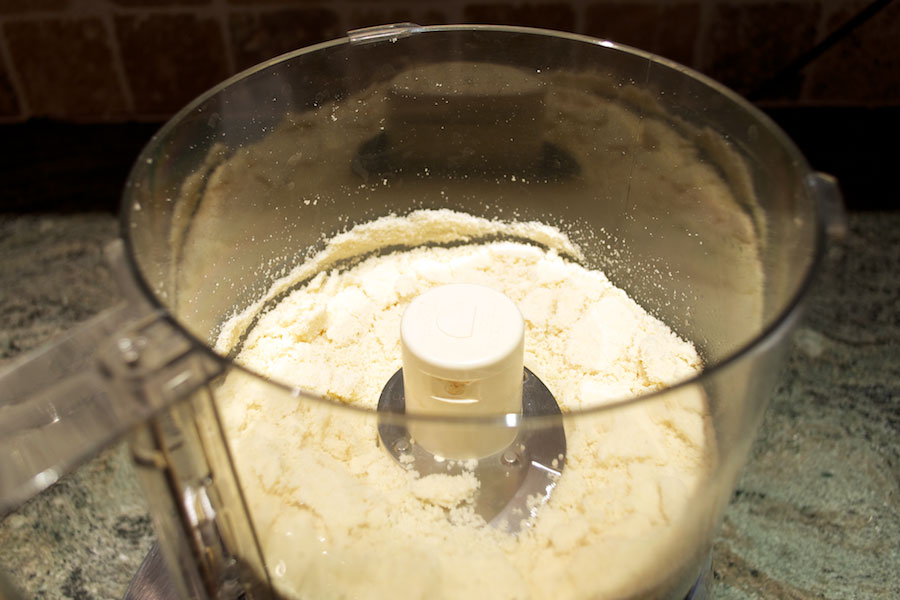
Place the dry blanched almonds in a food processor and pulse until they are ground into a fine powder.
Do not process continuously for too long. Almonds release oil as they are ground and can quickly turn into almond butter.
Make the Almond Paste
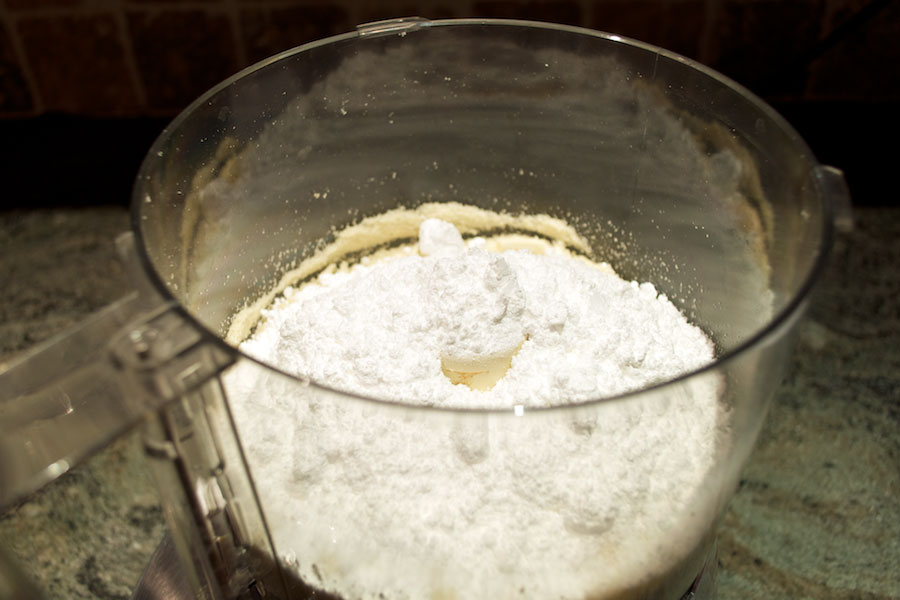
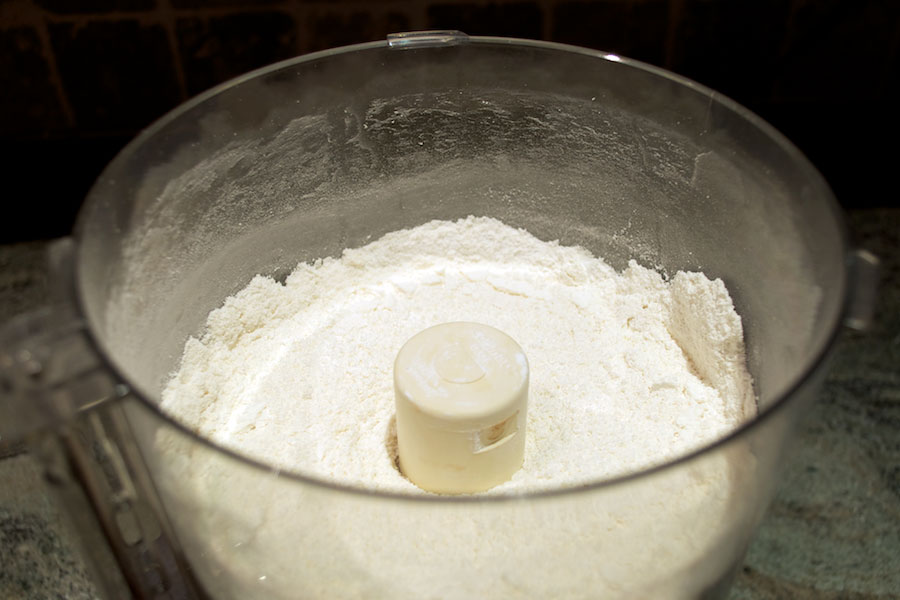
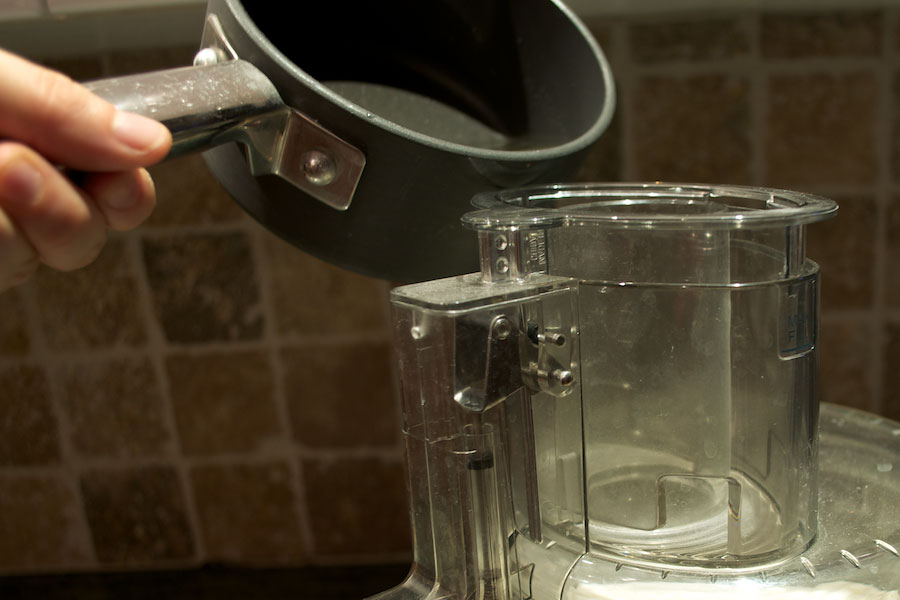
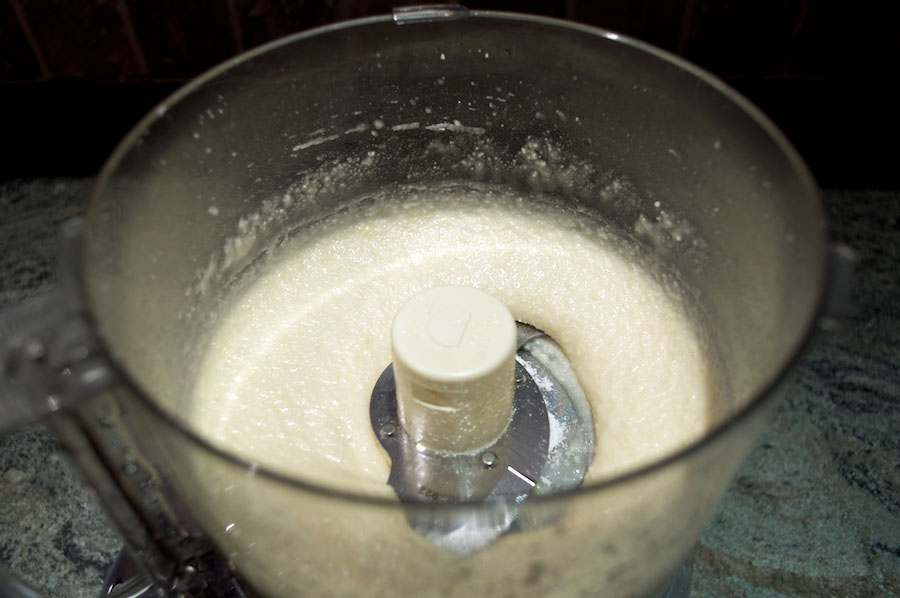
Add 5 1/3 ounces of powdered sugar to the ground almonds and pulse until evenly combined.
With the food processor running, gradually add the cooled simple syrup until the mixture forms a cohesive almond paste.
You may not need all of the syrup. Recently blanched almonds can retain additional moisture, so add the syrup slowly and stop when the paste comes together.
Mix in the Corn Syrup and Powdered Sugar
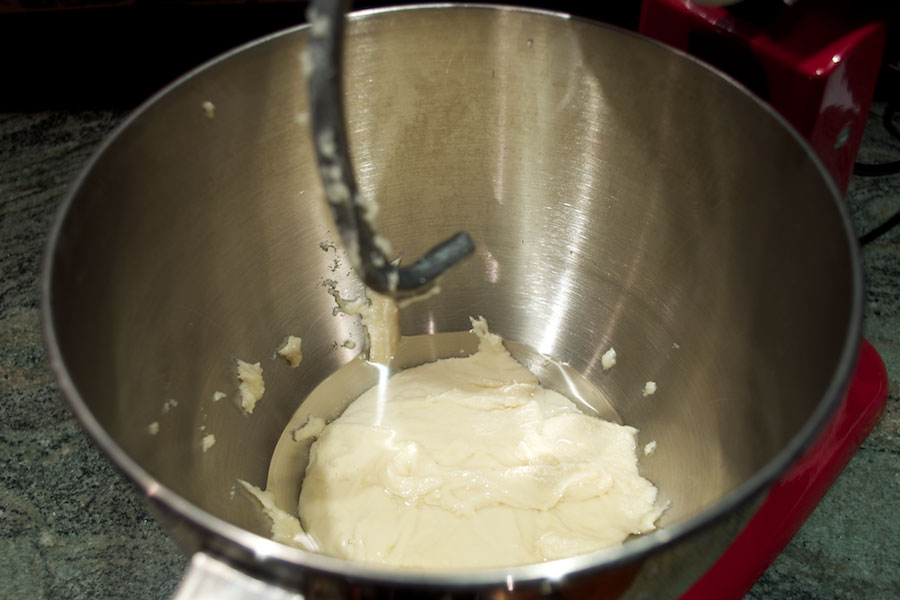
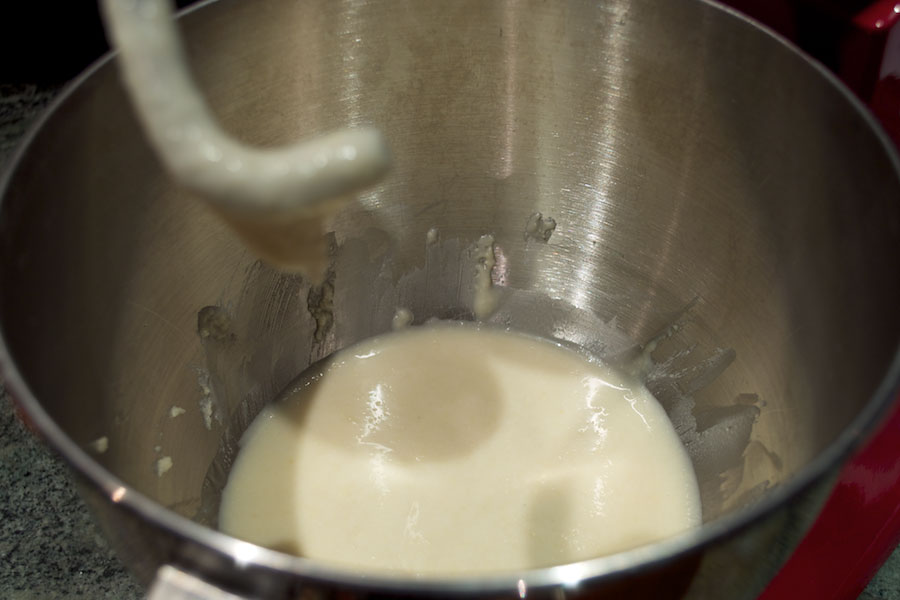
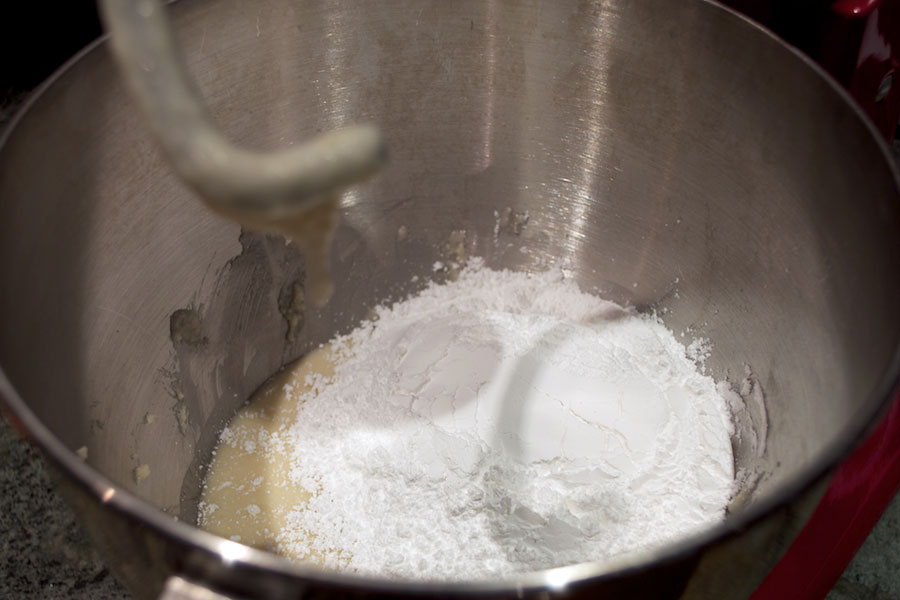
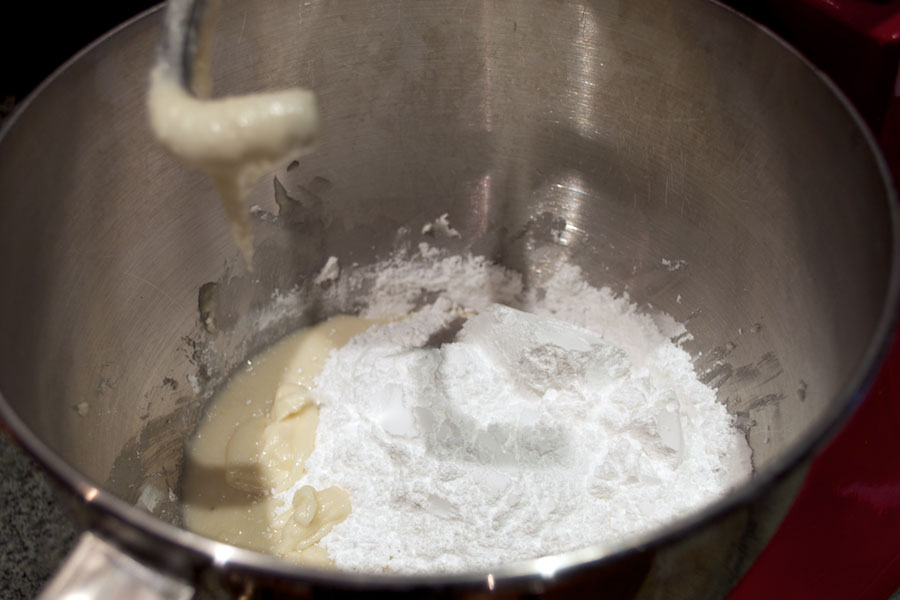
Transfer the almond paste to a clean, nonreactive mixing bowl fitted with a dough hook.
Add the light corn syrup and mix on low speed until combined.
Gradually add the remaining pound of sifted powdered sugar. Add it in several portions rather than all at once so it incorporates more evenly.
Finish the Marzipan
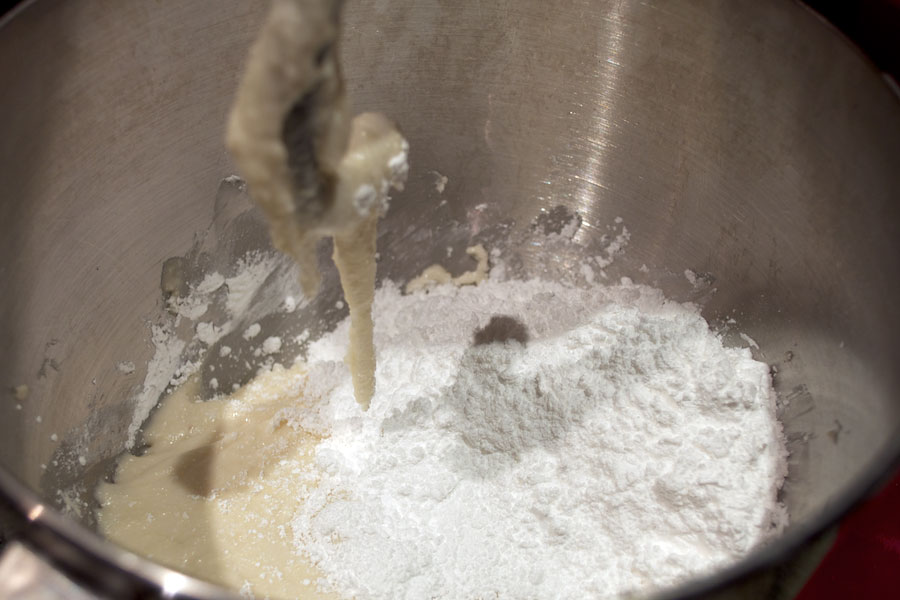
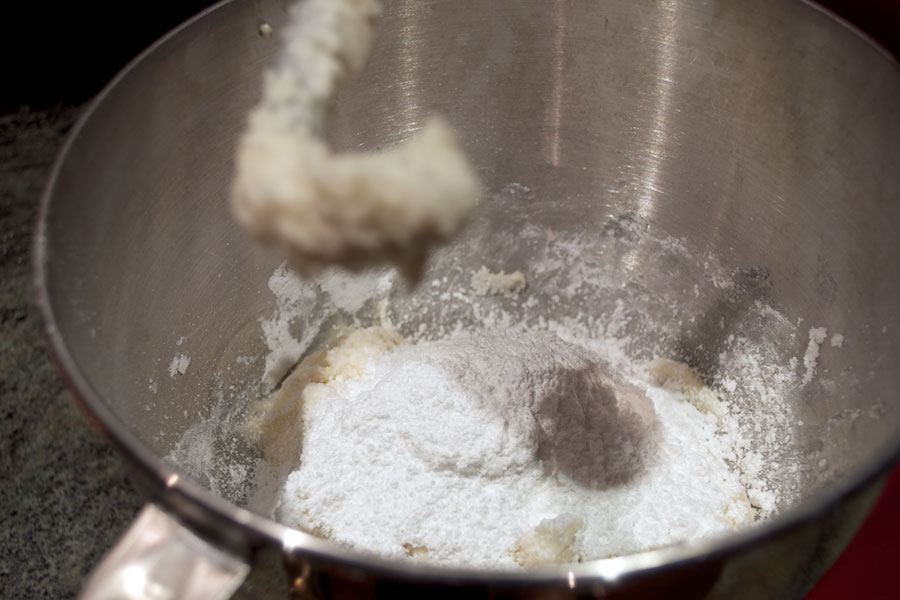
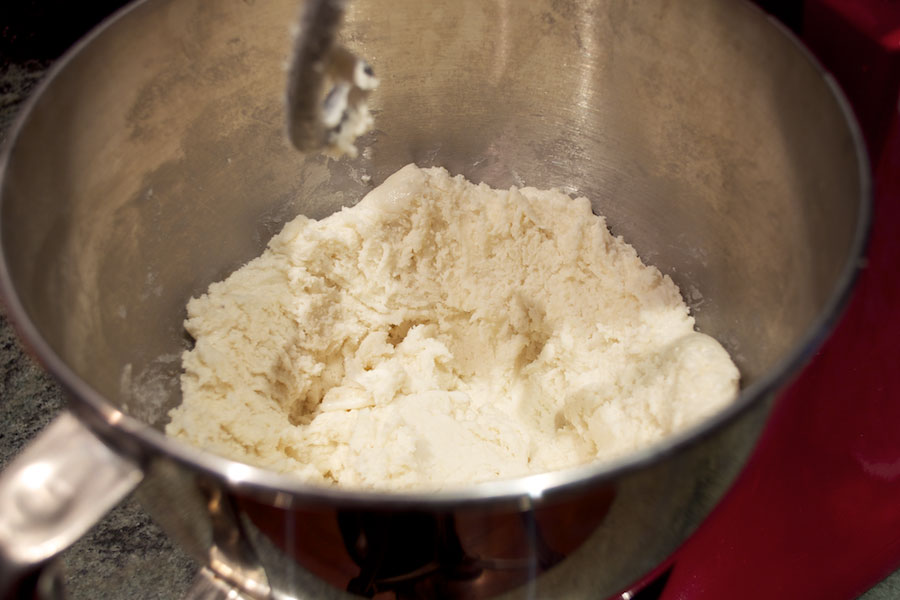
Scrape down the bowl as needed and continue mixing until the marzipan forms a smooth, cohesive dough.
Store it tightly wrapped or in an airtight container so it does not dry out.
Homemade Marzipan
A smooth almond confection made with finely ground blanched almonds, powdered sugar, simple syrup and light corn syrup.
Adapted from The Professional Pastry Chef: Fundamentals of Baking and Pastry, 4th Edition (opens Amazon in a new tab).
Ingredients
- 2.7 ounces granulated sugar (75 grams)
- 1/3 cup water (80 milliliters)
- 5 1/3 ounces dry blanched almonds (142 grams)
- 5 1/3 ounces powdered sugar (142 grams)
- 2 ounces light corn syrup (60 milliliters)
- 1 pound powdered sugar, sifted (455 grams)
Instructions
- Make the simple syrup. Combine the granulated sugar and water in a small saucepan. Bring to a boil and boil for 30 seconds.
- Cool the syrup. Remove it from the heat and let it cool to room temperature or until barely warm.
- Grind the almonds. Process the blanched almonds in a food processor until finely ground. Stop before they begin releasing enough oil to form almond butter.
- Add the first powdered sugar. Add 5 1/3 ounces of powdered sugar and pulse until evenly combined.
- Make the almond paste. With the processor running, gradually add enough cooled simple syrup to form a cohesive paste. You may not need all of it.
- Add the corn syrup. Transfer the almond paste to a stand mixer fitted with the dough hook. Add the light corn syrup and mix on low speed until combined.
- Add the remaining powdered sugar. Gradually add the sifted pound of powdered sugar in several additions.
- Finish the marzipan. Scrape down the bowl as needed and continue mixing until a smooth dough forms.
- Store the marzipan. Wrap it tightly or transfer it to an airtight container immediately.
Recipe Notes
- Use dry blanched almonds without skins for the smoothest, palest marzipan.
- Pulse the almonds instead of processing continuously so they do not turn into almond butter.
- Cool the simple syrup before adding it to the almonds.
- Add the syrup gradually because the amount needed depends on the moisture in the almonds.
- Sift the powdered sugar before mixing to remove lumps.
- Use a clean bowl and utensils because the pale marzipan will show dust and discoloration.
- Wrap the marzipan tightly as soon as it is finished because the surface dries quickly.
Homemade Marzipan FAQs
What is marzipan made from?
Marzipan is made primarily from finely ground almonds and sugar. This version also uses simple syrup and light corn syrup to bind the mixture and create a flexible texture.
What is the difference between marzipan and almond paste?
Marzipan generally contains more sugar and has a smoother, firmer texture suitable for rolling and modeling. Almond paste usually contains a higher proportion of almonds and is commonly used as a baking ingredient or filling.
Why did my almonds turn into almond butter?
The almonds were processed too long. Their natural oils were released, turning the ground nuts into a paste. Pulse in short intervals and stop as soon as they are finely ground.
Why is my marzipan too sticky?
Too much syrup may have been added, or the almonds may have contained additional moisture. Knead in a small amount of sifted powdered sugar until the marzipan becomes manageable.
Why is my marzipan dry and crumbly?
The mixture may need slightly more moisture. Knead in a very small amount of simple syrup or corn syrup until it becomes cohesive.
Can I use almond flour instead of whole blanched almonds?
Finely ground blanched almond flour can be used, but its moisture and texture may differ. Add the simple syrup gradually and stop as soon as a paste forms.
Can marzipan be colored?
Yes. Knead in gel or paste food coloring a small amount at a time. Keep unused portions covered while working.
Can marzipan be flavored?
Yes. Small amounts of almond extract, vanilla, citrus zest, liqueur or other concentrated flavorings can be kneaded into the finished marzipan.
How do I roll marzipan without sticking?
Dust the work surface and rolling pin lightly with powdered sugar. Turn the marzipan occasionally while rolling so it does not adhere to the surface.
How should homemade marzipan be stored?
Wrap it tightly and place it in an airtight container. Keep it in a cool, dry location and check for any signs of spoilage before use.
Does homemade marzipan need to be refrigerated?
Refrigeration provides a more conservative storage option, especially for longer storage or warm conditions. Bring it back toward room temperature before kneading or rolling.
Can marzipan be frozen?
Yes. Wrap it tightly, place it in an airtight freezer container and thaw it gradually before kneading it smooth again.
What equipment do I need for this recipe?
Recommended equipment: Stand mixer (opens Amazon in a new tab), Dough hook (opens Amazon in a new tab), Mixing bowl (opens Amazon in a new tab), Rubber spatula (opens Amazon in a new tab), Rolling pin (opens Amazon in a new tab), Saucepan (opens Amazon in a new tab), Food processor (opens Amazon in a new tab), Fine-mesh sieve (opens Amazon in a new tab).
As an Amazon Associate, I earn from qualifying purchases.
What is the estimated nutrition per pound?
Estimated nutrition per pound: Calories: 1798 calories; Carbohydrates: 373.3 g; Protein: 15.1 g; Fat: 35.4 g; Saturated Fat: 2.7 g; Unsaturated Fat: 32.7 g; Cholesterol: 0 mg; Sodium: 51 mg; Fiber: 8.9 g; Sugar: 355.2 g.


 Jeff’s Baking Blog