

Honey Whole Wheat Bread
There is nothing quite like the smell of freshly baked bread. Unfortunately, there is no way to embed that smell into a webpage. This honey whole wheat bread smells wonderful and tastes just as good.
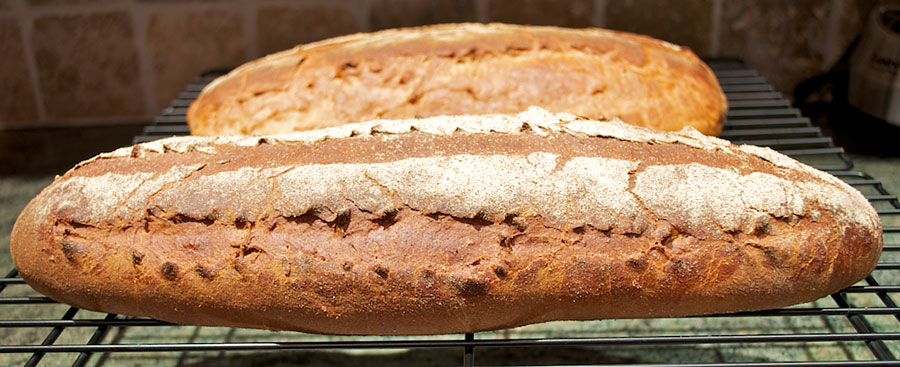
The finished loaves may look small in the photos, but each slice is approximately 6 inches long. I used the bread for open-faced tuna melts, French toast and sandwiches. It is also excellent on its own, toasted or served with butter and jam.
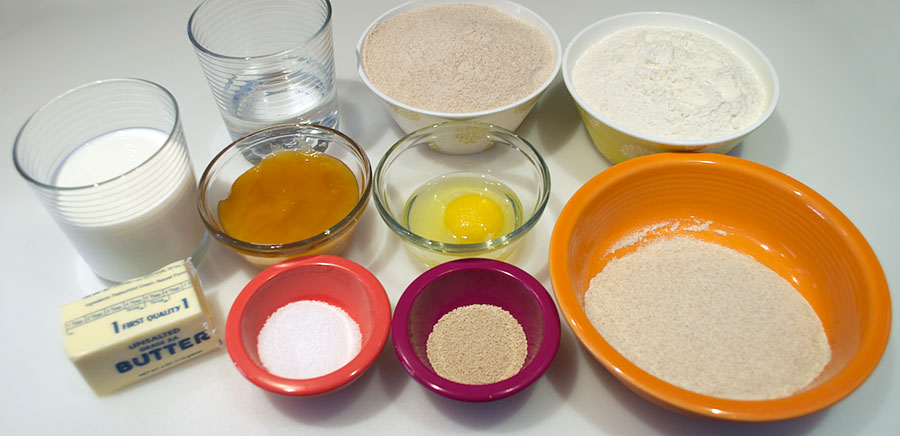
The complete recipe and detailed instructions are at the end of this post. You will need milk, kosher salt, honey, unsalted butter, active dry yeast, warm water, whole wheat flour, bread flour and an egg.
Warm the Milk Mixture and Dissolve the Yeast
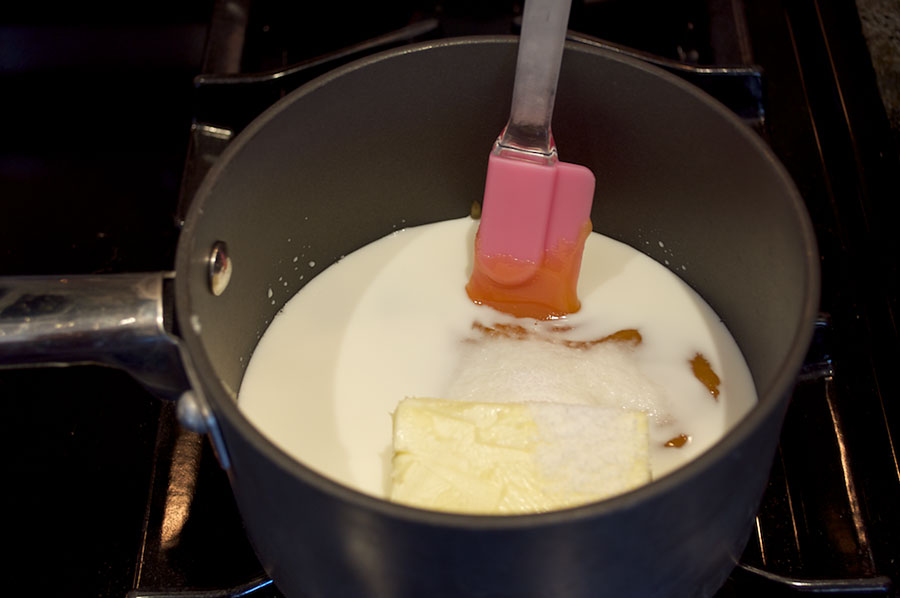
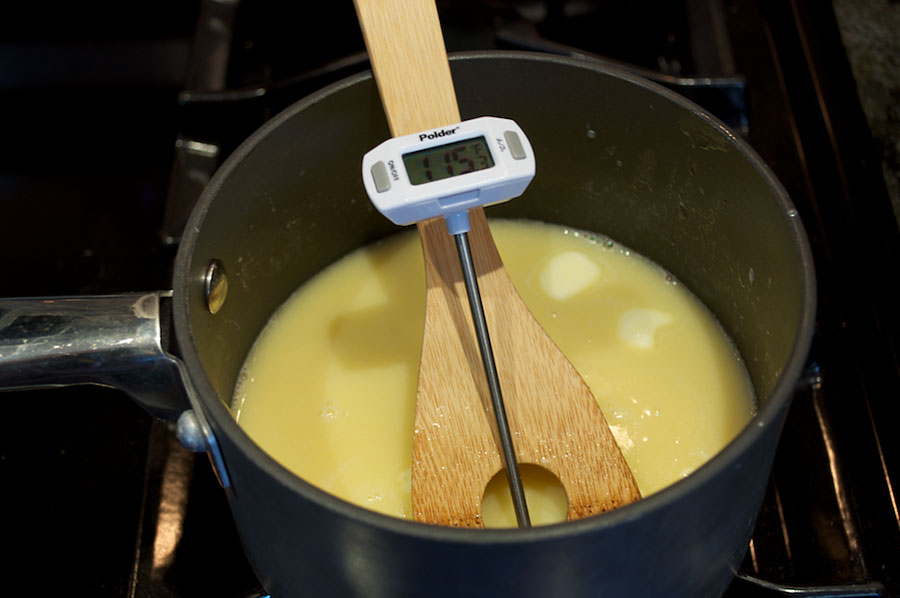

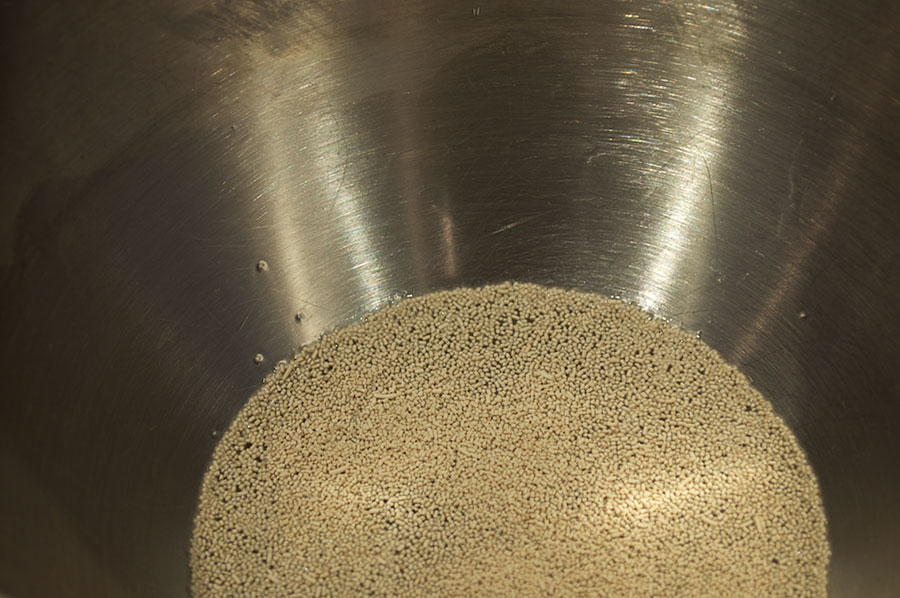
The original formula used table salt, but I replaced it with kosher salt by weighing it. Measuring salt by weight is more accurate because the size and density of the crystals vary among brands.
Combine the milk, honey, kosher salt and butter in a saucepan. Warm the mixture to approximately 115°F (46°C), then remove it from the heat.
Do not overheat the mixture. Liquid that is too hot can damage or kill the yeast.
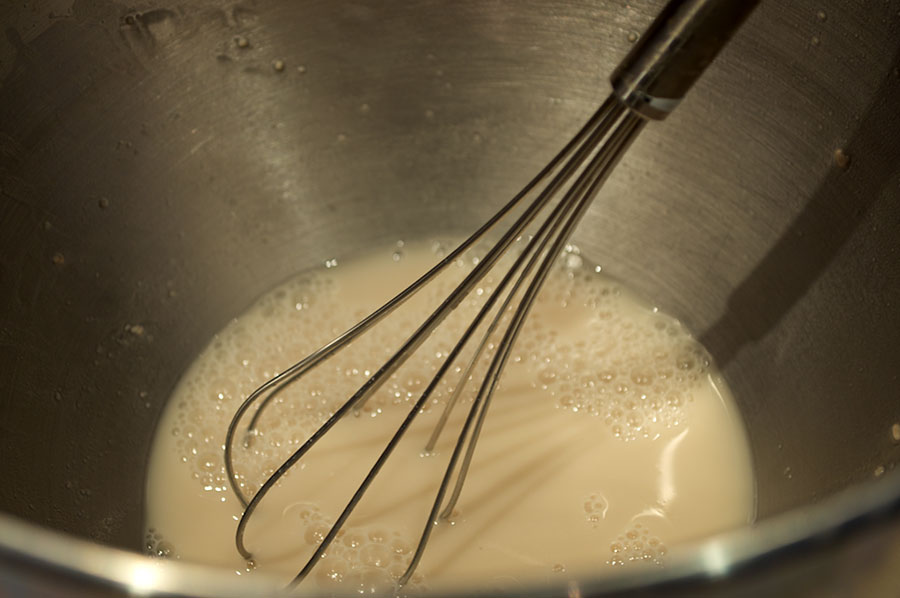
In the bowl of a stand mixer fitted with the dough hook, dissolve the active dry yeast in the warm water. Whisking briefly helps distribute the yeast.
Mix and Knead the Dough

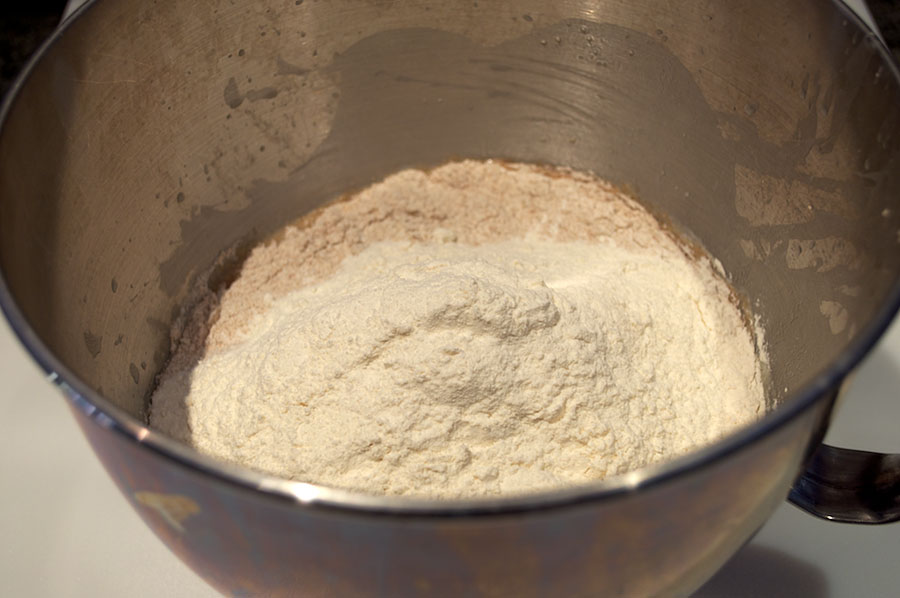
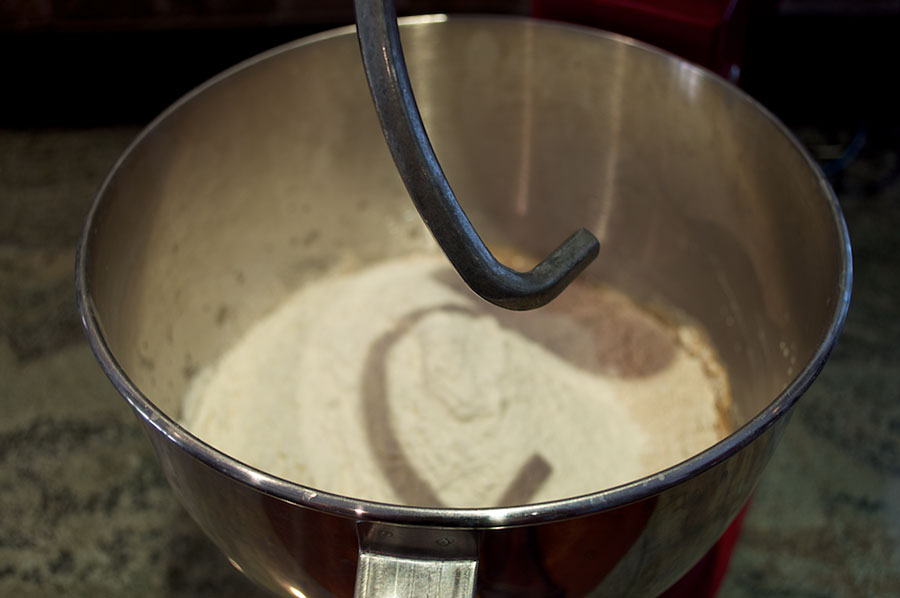

Add the warm milk mixture, whole wheat flour and all but approximately 1/3 cup of the bread flour.
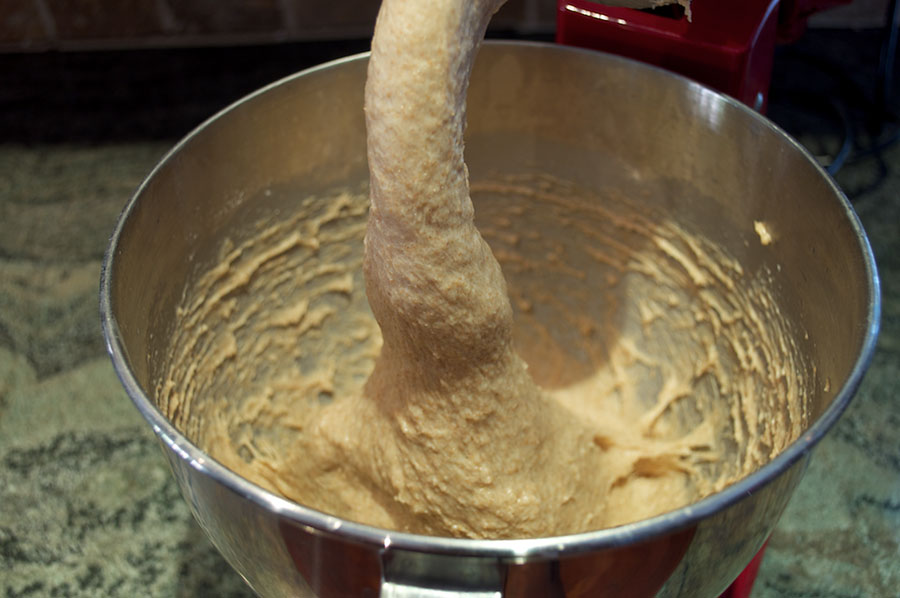
Mix on low speed for approximately eight minutes. Add some or all of the reserved bread flour only if the dough remains excessively loose and cannot pull together.
This dough begins wet and sticky, so avoid adding too much flour. After kneading, it should be smooth, elastic and slightly tacky.
Let the Dough Rise Twice
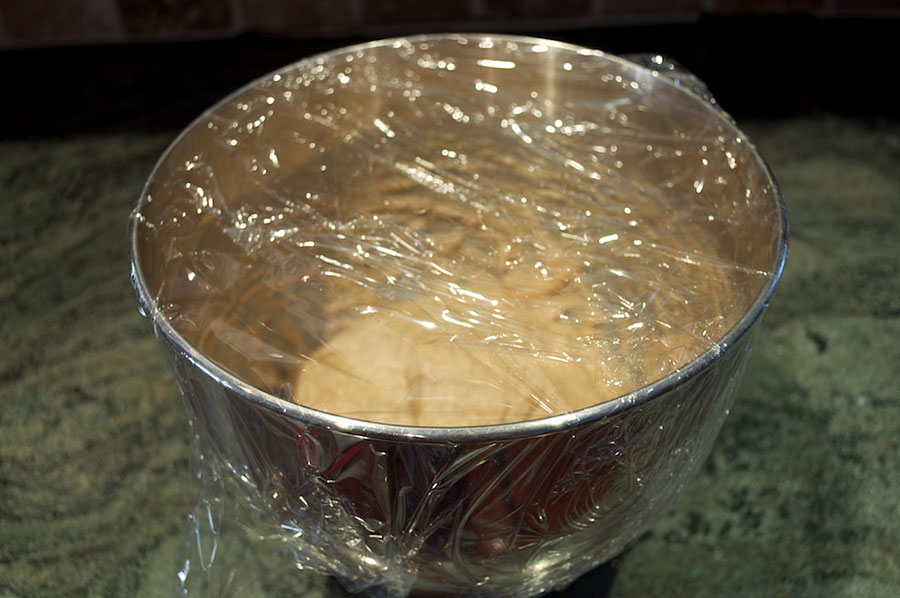

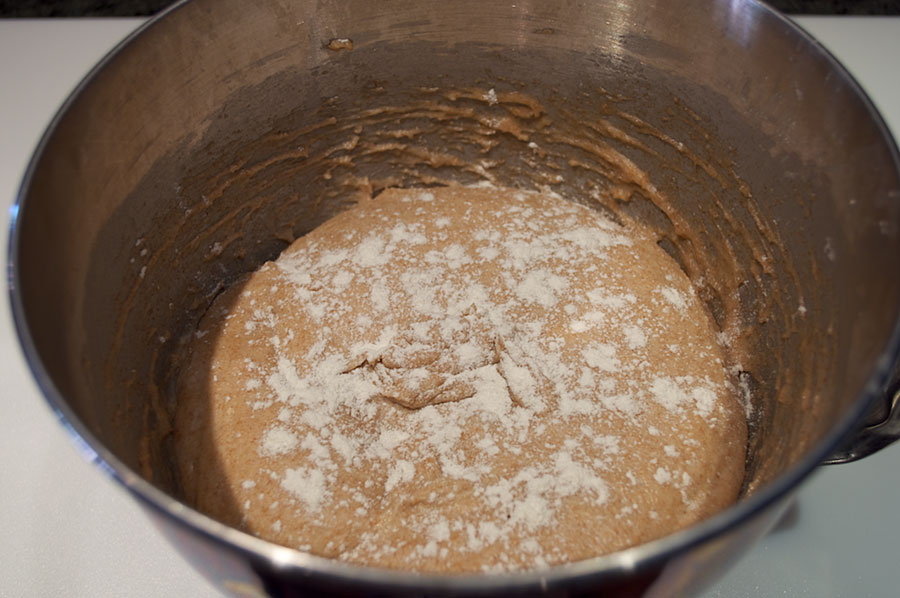

Cover the bowl with plastic wrap and place it in a warm, draft-free location until the dough doubles in volume.
A warm room or the top of the stove can work well. Avoid placing the dough in an oven that is still hot enough to damage the yeast or soften the butter excessively.
Gently press the dough down to release excess gas. Cover it again and let it rise until doubled a second time.
Divide and Shape the Loaves
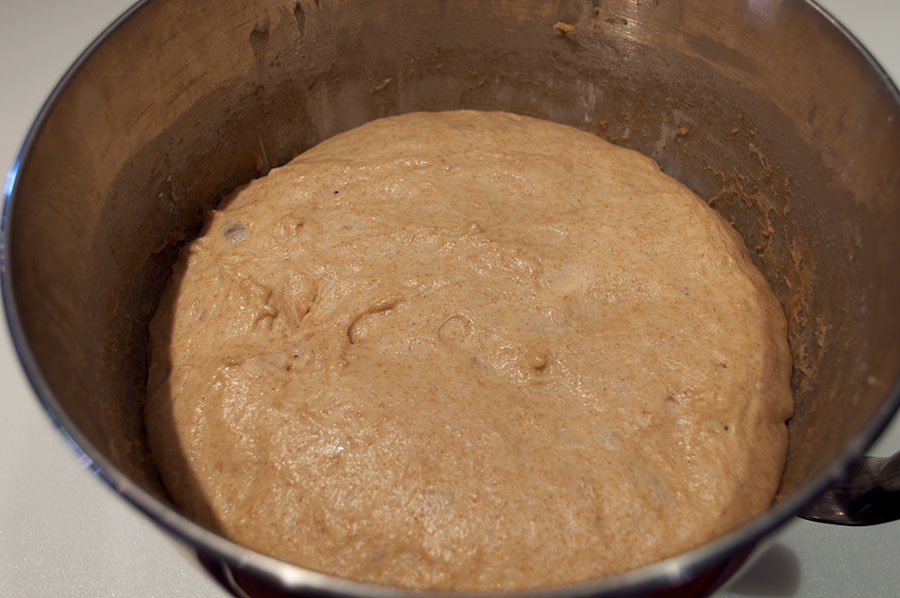
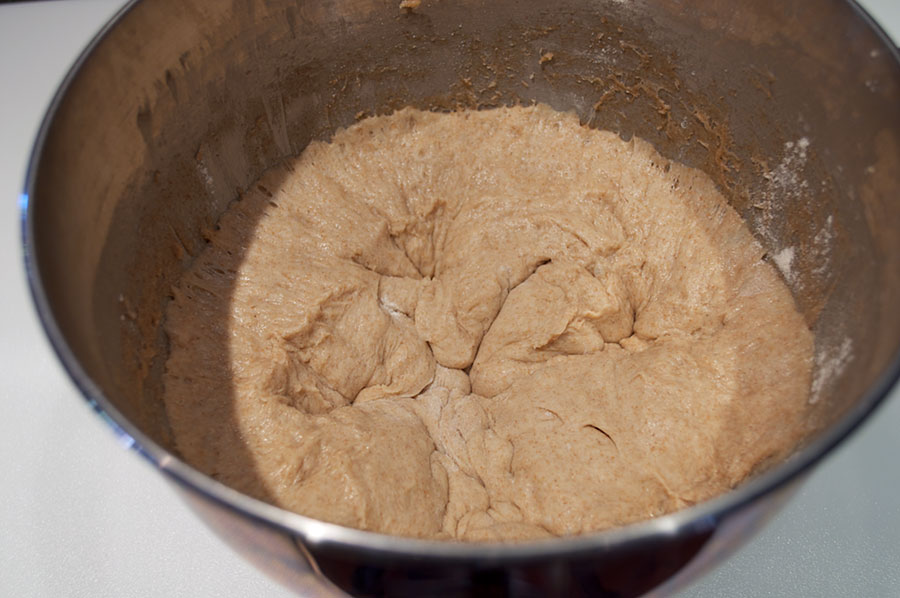
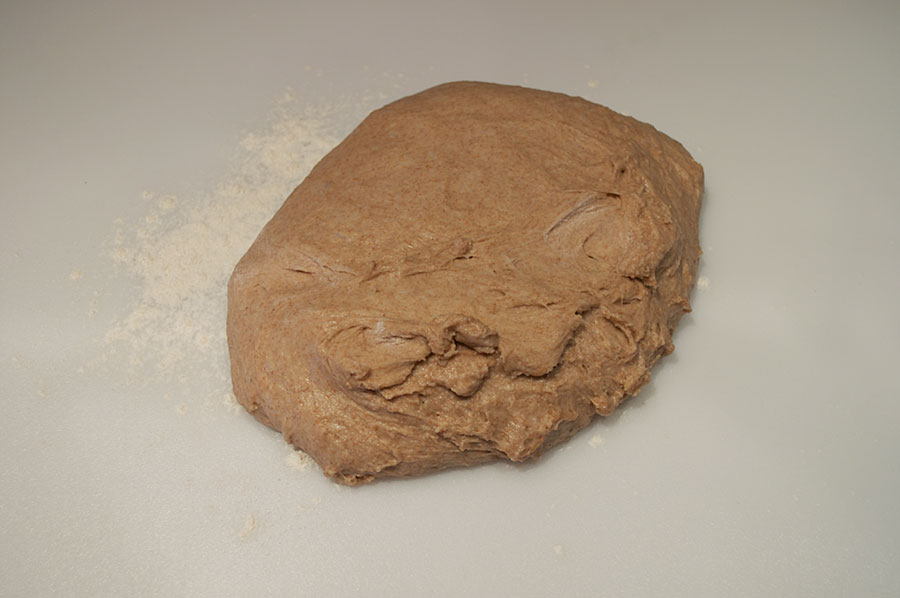
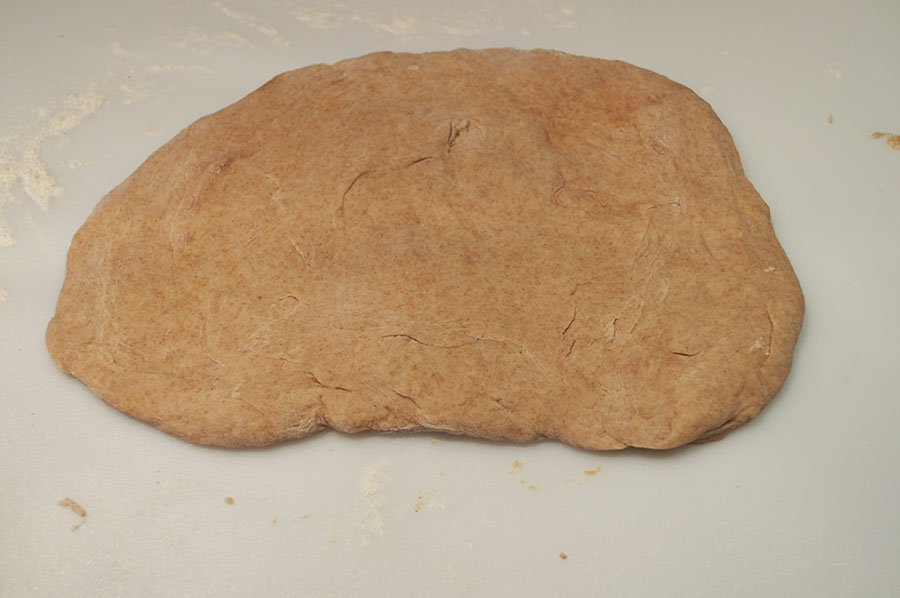
After the second rise, gently deflate the dough and divide it into two equal portions.
Flatten each portion into a rectangle approximately 12 inches long and 6 inches wide. The dimensions do not have to be exact, but keeping the pieces similar will help the loaves bake evenly.
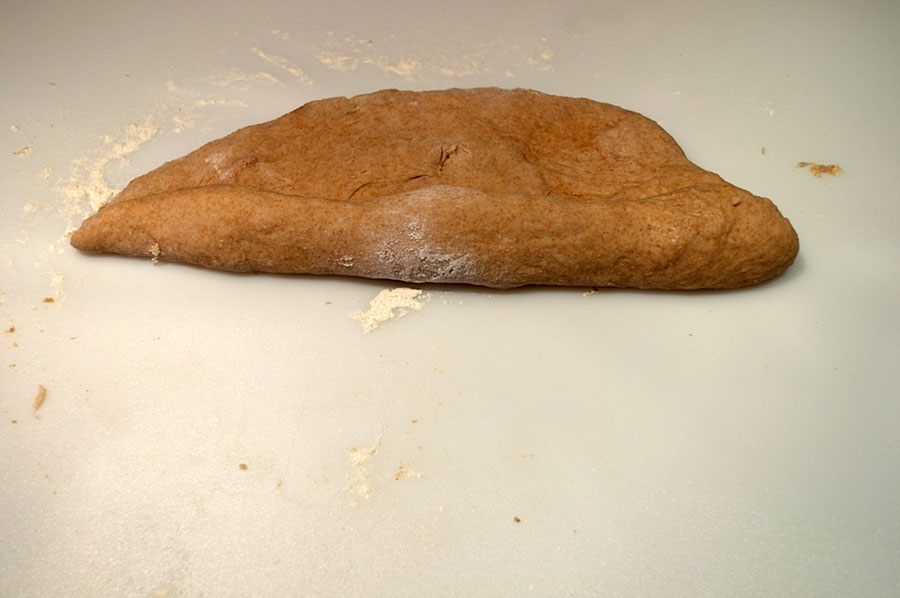
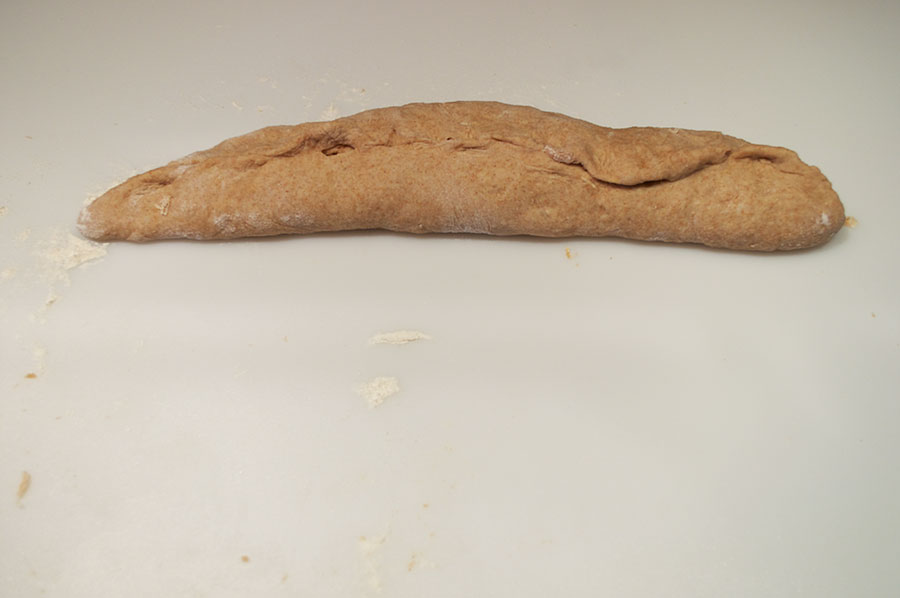
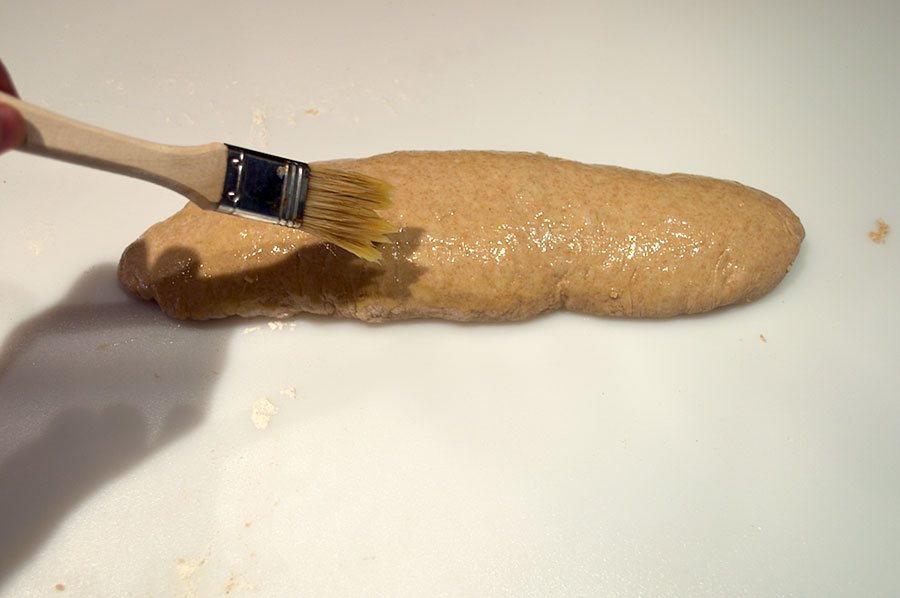
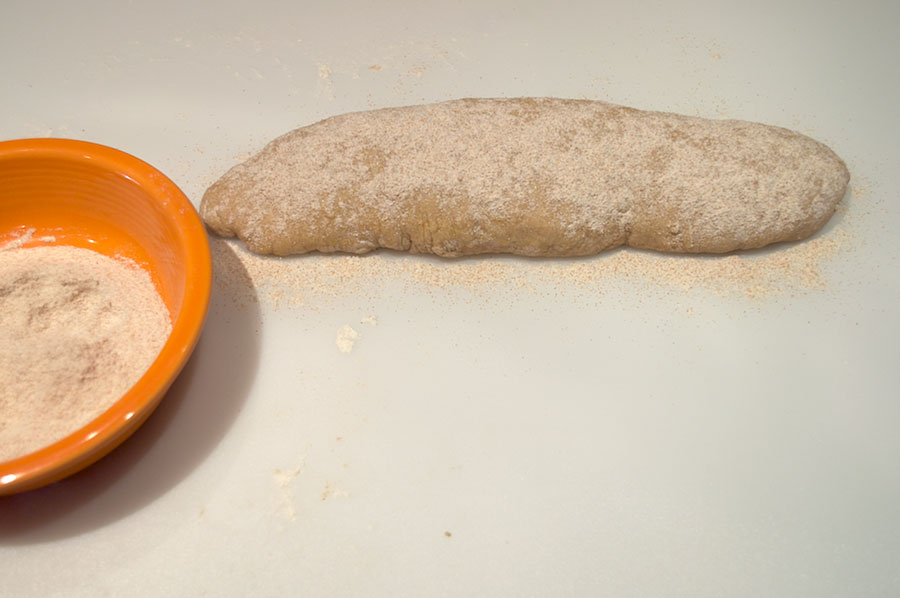
Roll each rectangle tightly into a loaf and pinch the seam closed. Place the loaves seam-side down on a baking sheet.
Beat the egg with 1/8 teaspoon of table salt. Brush the loaves with the egg wash, then dust the tops lightly with whole wheat flour.
Proof, Score and Bake
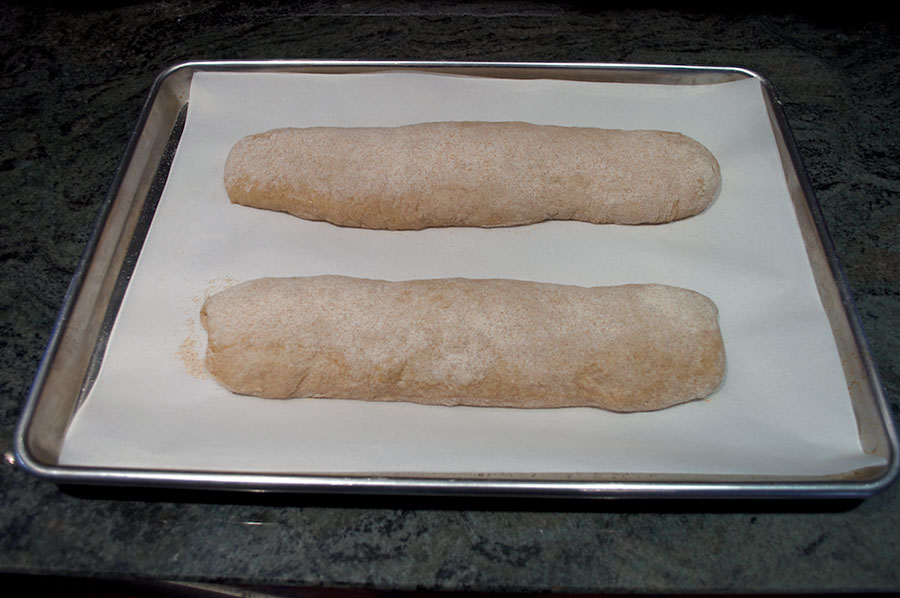
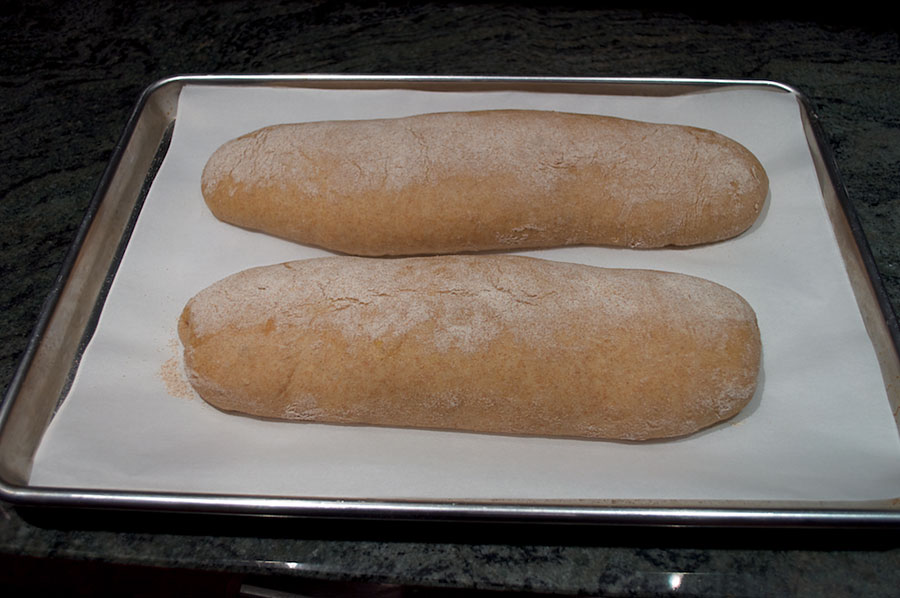
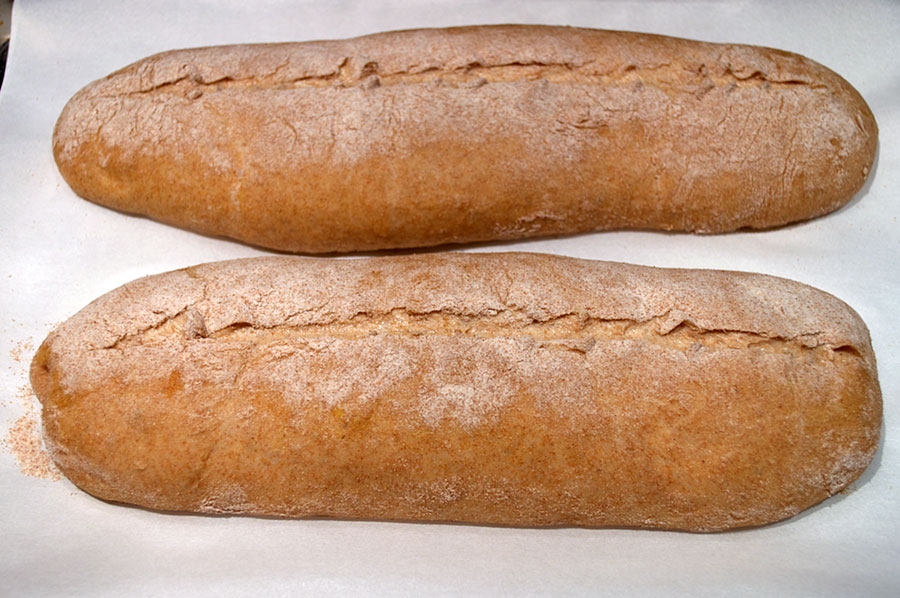

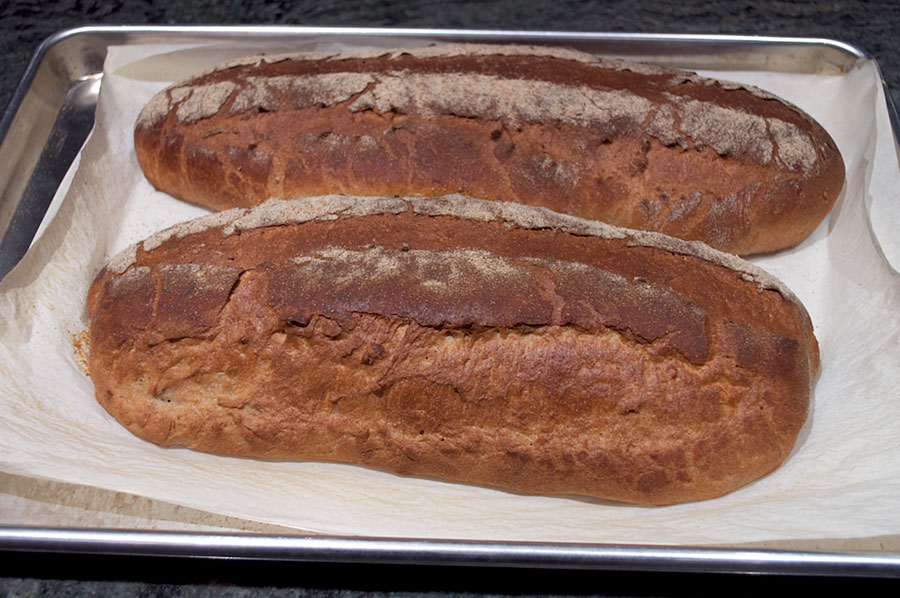
Let the shaped loaves rise until they are nearly doubled in volume.
Using a very sharp knife or bread lame, make three shallow lengthwise slashes approximately 1/4 inch deep in each loaf.
Bake for 10 minutes at 410°F (210°C). During the initial baking period, carefully introduce steam according to the directions below.
Reduce the oven temperature to 400°F (205°C) and continue baking for approximately 30 minutes, or until the loaves are dark golden brown and fully baked.
Transfer the loaves to a wire rack and let them cool before slicing.
Honey Whole Wheat Bread
Soft whole wheat bread sweetened with honey and enriched with milk and butter, shaped into two free-form loaves.
Adapted from The Professional Pastry Chef: Fundamentals of Baking and Pastry, 4th Edition (opens Amazon in a new tab).
Bread Dough
- 7/8 cup milk (210 milliliters)
- 2 2/3 teaspoons kosher salt (10 grams)
- 6 ounces honey (170 grams)
- 4 1/2 ounces unsalted butter, at room temperature (100 grams)
- 1/4 ounce active dry yeast (8 grams)
- 1/2 cup warm water, 105°F to 115°F or 40°C to 46°C (120 milliliters)
- 10 ounces whole wheat flour (285 grams)
- 10 ounces bread flour (285 grams), divided
Egg Wash and Finish
- 1 large egg
- 1/8 teaspoon table salt
- Whole wheat flour, as needed for dusting
Instructions
- Warm the milk mixture. Combine the milk, kosher salt, honey and butter in a saucepan. Heat to approximately 115°F (46°C), then remove it from the heat.
- Dissolve the yeast. In the bowl of a stand mixer fitted with the dough hook, dissolve the yeast in the warm water.
- Combine the dough. Add the milk mixture, whole wheat flour and all but approximately 1/3 cup of the bread flour.
- Knead the dough. Mix on low speed for approximately eight minutes. Add the reserved bread flour only as needed. The dough should become smooth and elastic but remain slightly tacky.
- Complete the first rise. Cover the dough and let it rise in a warm location until doubled in volume.
- Deflate and rise again. Gently press down the dough, cover it and let it double a second time.
- Divide the dough. Gently deflate it and divide it into two equal portions.
- Shape the loaves. Flatten each portion into an approximately 12-by-6-inch rectangle. Roll each rectangle into a loaf and pinch the seam closed.
- Prepare for proofing. Place the loaves seam-side down on a baking sheet.
- Add the egg wash. Beat the egg with 1/8 teaspoon of table salt. Brush it over the loaves and dust them lightly with whole wheat flour.
- Complete the final proof. Let the loaves rise until nearly doubled in volume.
- Preheat and score. Preheat the oven to 410°F (210°C). Cut three shallow lengthwise slashes approximately 1/4 inch deep into each loaf.
- Begin baking. Bake for 10 minutes at 410°F (210°C). Carefully introduce steam during the initial baking period.
- Finish baking. Reduce the temperature to 400°F (205°C) and bake for approximately 30 minutes more, or until dark golden brown and fully baked.
- Cool the bread. Transfer the loaves to a wire rack and cool before slicing.
Recipe Notes
- Measuring salt by weight produces more consistent results because different salts have different crystal sizes.
- The original metric conversion for the water appeared to be incorrect. One-half cup is approximately 120 milliliters, not 240 milliliters.
- Do not heat the milk mixture beyond approximately 115°F before combining it with the yeast.
- The dough should remain slightly tacky. Adding too much flour can produce dense, dry bread.
- Rising times depend on room temperature and dough temperature, so judge by volume rather than the clock.
- A turned-off oven can be used as a proofing space only when it has cooled to a comfortably warm temperature.
- Use caution when adding steam to a hot oven. Avoid spraying water onto the oven light, glass door or heating element.
- The loaves are fully baked when deeply browned and the centers reach approximately 190°F to 200°F.
Honey Whole Wheat Bread FAQs
Why is my whole wheat bread dense?
The dough may contain too much flour, may not have been kneaded enough or may not have risen sufficiently. Whole wheat flour also absorbs more liquid than white flour, so the dough should remain slightly tacky.
Why does this recipe use both whole wheat flour and bread flour?
Whole wheat flour provides flavor and nutrition, while bread flour supplies additional gluten-forming protein. The combination creates a lighter, more elastic loaf than using only whole wheat flour.
What does honey do in bread dough?
Honey adds sweetness, contributes to browning and helps the bread retain moisture. It also provides fermentable sugars for the yeast.
Why does the dough rise twice before shaping?
The additional fermentation develops flavor and dough strength. Gently deflating the dough redistributes the yeast and allows fermentation to continue more evenly.
How warm should the water be for active dry yeast?
The water should be warm but not hot, generally between 105°F and 115°F. Excessively hot water can damage the yeast.
Why is the dough still sticky after kneading?
This is a relatively moist dough. Slight tackiness is normal and helps produce a softer loaf. Add more flour only when the dough is excessively loose and cannot develop structure.
Why are the loaves scored before baking?
Scoring creates controlled expansion points. Without the cuts, pressure may cause the loaves to split unpredictably along the sides or seams.
What does steam do when baking bread?
Steam delays formation of the crust during the first part of baking, allowing the loaves to expand. It can also help create a smoother, more deeply colored crust.
How do I know when the bread is fully baked?
The loaves should be dark golden brown and sound hollow when tapped underneath. An internal temperature near 190°F to 200°F is another useful indicator.
Why should bread cool before slicing?
The crumb continues setting as the bread cools. Cutting too early releases steam and can leave the interior gummy or compressed.
Can honey whole wheat bread be frozen?
Yes. Cool the bread completely, wrap it tightly and freeze it whole or sliced. Thaw it at room temperature before serving.
How should honey whole wheat bread be stored?
Store the cooled bread in an airtight bag or container at room temperature. For longer storage, freeze it rather than refrigerating it, since refrigeration can accelerate staling.
What equipment do I need for this recipe?
Recommended equipment: Stand mixer (opens Amazon in a new tab), Dough hook (opens Amazon in a new tab), Kitchen scale (opens Amazon in a new tab), Instant-read thermometer (opens Amazon in a new tab), Baking sheet (opens Amazon in a new tab), Cooling racks (opens Amazon in a new tab), Saucepan (opens Amazon in a new tab).
As an Amazon Associate, I earn from qualifying purchases.
What is the estimated nutrition per serving?
Estimated nutrition per serving: Calories: 146 calories; Carbohydrates: 24.4 g; Protein: 3.1 g; Fat: 4.1 g; Saturated Fat: 2.4 g; Unsaturated Fat: 1.5 g; Trans Fat: 0.1 g; Cholesterol: 18 mg; Sodium: 184 mg; Fiber: 0.7 g; Sugar: 6.4 g.


 Jeff’s Baking Blog