

Garlic-Herb Bread
There is nothing like fresh, hot bread. One of my favorite memories is eating fresh bread from my grandma during summer vacations. Living in Norway, I grew accustomed to fresh bread. They don’t use preservatives, so you buy your bread fresh and hot every day. I don’t make it often enough, but I enjoy it quite a bit when I do.
This recipe makes a nice savory bread. It’s great with a little butter. It also holds up well when thinly sliced and toasted. We ate it with a salmon dinner and used it as the bread for a salmon patty sandwich: leftover salmon, breadcrumbs and an egg formed into a patty and lightly fried, then served with a little mayonnaise and cheese. The flavors complemented the fish very well, and I imagine it would go great with a meaty dish or stew.
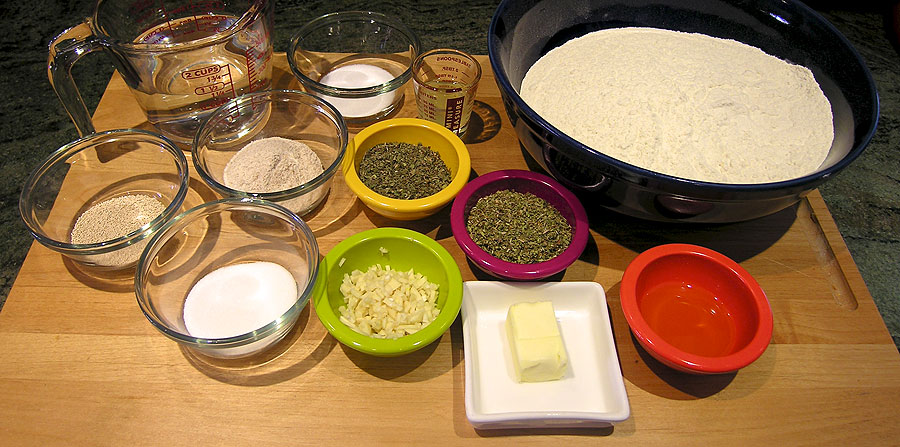
Making Garlic-Herb Bread
The recipe and detailed instructions are at the end of this post. For this recipe, we need fresh garlic, olive oil, yeast, water, egg white, granulated sugar, salt, oregano, basil, bread flour and whole wheat flour. It looks like we have it all. Ready, set, bake…
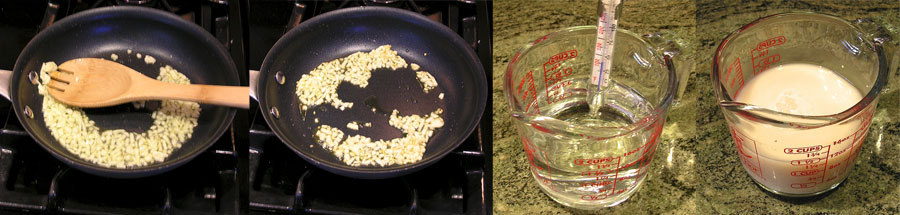
Sauté the garlic in olive oil over low heat. This softens the flavor of the garlic. If your garlic is very strong, reduce the amount. Don’t brown the garlic because that will result in a bitter flavor. Set the sautéed garlic and oil aside to cool.
Stir the yeast into the warm water to dissolve it. Use a thermometer to make sure the temperature is between 105°F and 115°F (40°C and 46°C) before combining the yeast and water. Let it sit until bubbly, about 5 minutes.

Stir in the egg white, sugar, salt, oregano, basil, cooked garlic and oil, and all but about ½ cup of the bread flour.
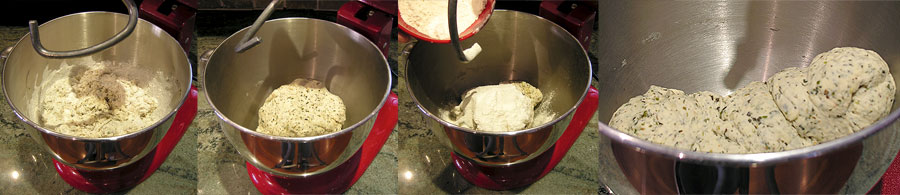
Using the dough hook on medium speed, knead the dough, adding the reserved bread flour as required, until the dough is fairly stiff and smooth. Once the dough ball has formed, let the mixer run for another 2 or 3 minutes to knead it.

Place the dough in an oiled bowl, turn it to coat both sides with oil, cover and let it rise for 1 hour. I covered mine with plastic wrap, but you could use a warm, damp cloth.
The ideal temperature for yeast dough to rise is between 78°F and 82°F (26°C and 28°C). There are many ways to obtain this environment. This time, I briefly warmed my oven, turned it off completely and put the covered bowl in the gently warmed oven for an hour. It rose perfectly. Make sure the oven is only slightly warm and not hot enough to damage the yeast.
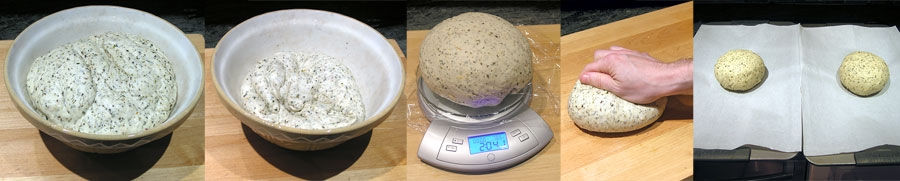
Punch down the dough and divide it into 2 equal pieces, about 1 pound 2 ounces each. I used my scale to make sure I had about half the total weight in each dough ball. If you don’t have a scale, I highly recommend getting one. Most of the recipes I make use a scale for accurate measurements rather than cup measurements. A scale also makes reducing a recipe’s yield easy.
Shape each piece into a round loaf. Starting with the loaf formed first, shape each one into a tight oval loaf. Using the heel of your hand, work your way around the ball several times, pushing the dough toward the center. The loaves should spring back when pressed lightly. Place the loaves seam-side down on sheet pans lined with parchment paper.
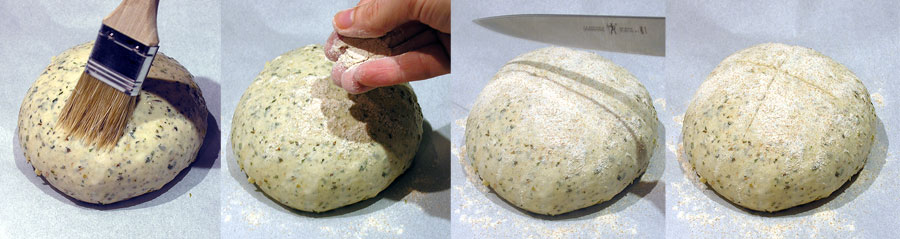
This is optional, but it makes a nice presentation. Brush each loaf with water and sprinkle it lightly with whole wheat flour.
This is not optional: make diagonal slashes across each loaf, about ¼ inch deep. The cuts give the expanding dough a controlled place to open as the loaves bake. If they are not cut, the crust may split wherever it finds the weakest point, leaving you with ugly loaves of bread.
Let the loaves rise until doubled in volume. This took about 45 minutes, but the time will vary.
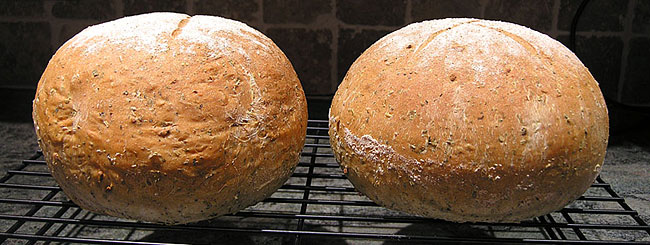
Bake at 375°F (191°C) for about 30 minutes. Cool the loaves on wire racks.
Garlic-Herb Bread
This savory yeast bread is flavored with gently sautéed garlic, oregano and basil. It makes two sturdy loaves that are excellent with butter, toasted or served alongside salmon, meat or stew.
Adapted from The Professional Pastry Chef: Fundamentals of Baking and Pastry, 4th Edition by Bo Friberg.
Ingredients
- 0.67 ounces (18 g) fresh garlic, minced
- 1 tablespoon (15 ml) olive oil
- 0.34 ounces (9 g) active dry yeast
- 1⅓ cups (313 ml) warm water, 105°F to 115°F (40°C to 46°C)
- 20 ml egg white
- 0.67 ounces (18 g) granulated sugar
- 1⅓ tablespoons (20 g) salt
- 5 g dried oregano
- 5 g dried basil
- 1 pound 6.8 ounces (645 g) bread flour, divided
- Water, for brushing
- Whole wheat flour, for dusting
Instructions
- Sauté the garlic in the olive oil over low heat until softened and fragrant. Do not let the garlic brown. Remove it from the heat and set it aside to cool.
- Dissolve the yeast in the warm water and let it stand until bubbly, about 5 minutes.
- Add the egg white, sugar, salt, oregano, basil, cooled garlic and oil, and all but about ½ cup of the bread flour.
- Using a dough hook on medium speed, knead the dough while gradually adding as much of the reserved flour as needed. Continue kneading until the dough is fairly stiff, smooth and elastic, about 2 to 3 minutes after a cohesive dough ball forms.
- Place the dough in a lightly oiled bowl and turn it to coat all sides. Cover the bowl and let the dough rise in a warm place until doubled, about 1 hour.
- Punch down the dough and divide it into 2 equal portions, about 1 pound 2 ounces (510 g) each.
- Shape each portion into a tight round or oval loaf. Place the loaves seam-side down on a sheet pan lined with parchment paper.
- Brush the loaves lightly with water and dust them with whole wheat flour, if desired. Cut several diagonal slashes across each loaf, about ¼ inch (6 mm) deep.
- Cover the loaves loosely and let them rise until doubled in volume, about 45 minutes.
- Heat the oven to 375°F (191°C). Bake the loaves for about 30 minutes, until browned and baked through. Transfer them to wire racks and cool before slicing.
Recipe Notes
- Keep the garlic over low heat and remove it before it browns. Browned garlic can give the bread a bitter flavor.
- The original directions mentioned butter, but no butter was included in the ingredient list. This version uses only the olive oil in which the garlic is cooked.
- The original metric and imperial flour measurements did not agree. The 645 g weight has been retained and corrected to approximately 1 pound 6.8 ounces.
- Use an instant-read thermometer to check the water temperature. Water that is too hot can damage or kill the yeast.
- Do not place the dough in a hot oven to rise. A turned-off oven that is only slightly warm is sufficient.
- Scoring the loaves gives the expanding dough a controlled place to open. Use a very sharp knife, razor or bread lame.
- The bread is best eaten the day it is baked. Store a cooled loaf in an airtight container at room temperature for up to 2 days.
- For longer storage, wrap the fully cooled bread tightly and freeze it. Thaw it at room temperature and warm it briefly before serving.
Garlic-Herb Bread FAQs
Can I use instant yeast instead of active dry yeast?
Yes. Use the same weight of instant yeast. It can be mixed directly with the flour, although dissolving it in the warm water will not harm it.
Why shouldn’t the garlic be browned?
Garlic can become bitter when it browns too much. Cooking it gently in olive oil softens its sharp flavor without introducing bitterness.
How do I know when the dough has finished its first rise?
The dough should be roughly doubled in volume. If you press it gently with a fingertip, the indentation should fill back slowly rather than springing back immediately.
Can I knead this bread by hand?
Yes. Knead it on a lightly floured surface until the dough is smooth and elastic. Add the reserved flour gradually so the dough does not become unnecessarily dry.
Why is the flour added gradually?
Flour absorbs moisture differently depending on the brand, humidity and measuring method. Holding some back allows you to add only what the dough needs.
Do I have to sprinkle the loaves with whole wheat flour?
No. The whole wheat flour is decorative and may be omitted without changing the structure or flavor of the bread.
Why do the loaves need to be slashed?
The cuts allow the dough to expand in controlled places during baking. Without scoring, pressure may cause the crust to tear unevenly.
How can I tell when the bread is fully baked?
The crust should be browned and the loaves should sound hollow when tapped on the bottom. The center should register about 190°F to 200°F (88°C to 93°C) on an instant-read thermometer.
Can I replace the dried herbs with fresh herbs?
Yes. Use approximately three times as much finely chopped fresh oregano and basil as dried herbs. The flavor will be fresher but less concentrated.
What is the best way to store garlic-herb bread?
Keep the fully cooled bread in an airtight container at room temperature for up to 2 days. Freeze it for longer storage rather than refrigerating it, since refrigeration can make bread stale more quickly.
What equipment do I need for this recipe?
Recommended equipment: Dough hook (opens Amazon in a new tab), Instant-read thermometer (opens Amazon in a new tab), Baking sheet (opens Amazon in a new tab), Parchment paper (opens Amazon in a new tab), Cooling racks (opens Amazon in a new tab).
As an Amazon Associate, I earn from qualifying purchases.
What is the estimated nutrition per serving?
Estimated nutrition per serving: Calories: 106 calories; Carbohydrates: 21.3 g; Protein: 2.8 g; Fat: 0.8 g; Saturated Fat: 0.1 g; Unsaturated Fat: 0.7 g; Trans Fat: 0 g; Cholesterol: 0 mg; Sodium: 328 mg; Fiber: 0.7 g; Sugar: 0.8 g.


 Jeff’s Baking Blog