

Blueberry Lemon Scones
I grew up eating “Mormon scones.” Whenever someone talked about scones, I was a bit confused. A Mormon scone is a deep-fried piece of yeast dough that you top with powdered sugar, jam or honey. It’s a bit like a doughnut, only flat and more bread-like in flavor. They still remind me of family campouts and church gatherings. It’s one food from my younger days that I still crave, but that’s not what we’re making today.
I’ve since learned what everyone else calls a scone: a small English quick bread often made with fruit or nuts. They make a great breakfast or snack. They’re easy to bake and require only about 20 minutes to mix and prepare for the oven.
This is a modified recipe from my baking class. The original uses more cream and dried fruit. It is a fairly easy recipe to execute. However, be prepared to get your hands messy—it’s the best way to mix these scones.
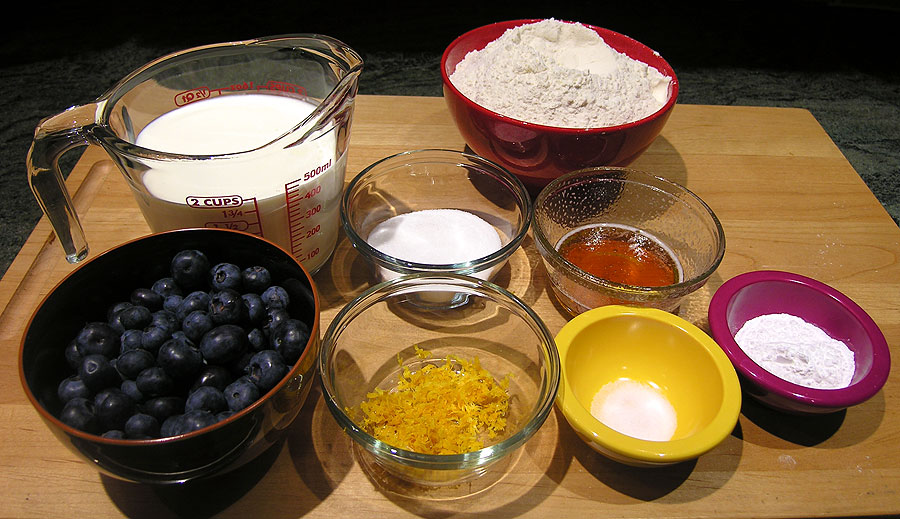
Making the Blueberry Lemon Scones
The recipe and detailed instructions are at the end of this post. For this recipe, we need blueberries, bread flour, granulated sugar, baking powder, lemon zest, salt, heavy cream and honey. Looks like we have it all. Ready, set, bake…

Combine the flour, sugar, baking powder and salt in a mixing bowl. We don’t want to incorporate a lot of air, so use a spoon to mix the dry ingredients together.
Add all but ¼ cup of the cream, along with the honey and lemon zest, to the dry ingredients. Mix by hand only until the ingredients come together. The mixture will be dry, so be careful not to overmix it.
Add the blueberries and gently combine them with the dough. Break a few of the berries as you mix to release enough liquid to help the dough hold together. It will get a bit sticky at this point, but it should not be wet.
Form the dough into a round mound in the bowl. Cover it and set it aside to rest for 5 minutes. This allows the flour to hydrate and the gluten to relax before shaping.

On a lightly floured surface, gently knead the dough just enough to bring it together and tighten its structure. Press or pat it into a log about 15 inches long and 2 inches thick. Using a knife, cut the log into triangles of the desired size. These are about 2½ inches long on each side.
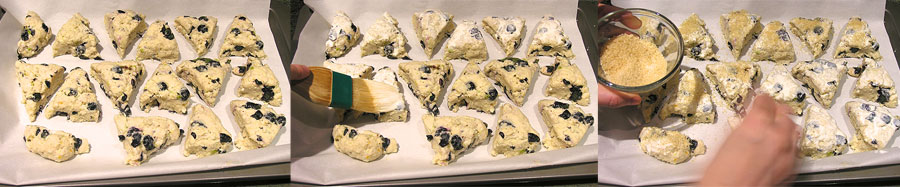
Place the cut scones on a baking sheet lined with parchment paper. Brush the top of each scone with some of the reserved cream. Sprinkle the pieces with granulated sugar or, as I did, turbinado sugar. Bake at 425°F (218°C) for approximately 15 minutes, or until golden brown.
Blueberry Lemon Scones
Fresh blueberries, lemon zest, honey and heavy cream come together in tender scones with crisp, sugar-coated tops.
Ingredients
- 6 ounces (170 g) fresh blueberries
- Finely grated zest of 1 lemon
- 14 ounces (398 g) bread flour
- 1½ ounces (43 g) granulated sugar
- 1½ tablespoons (15 g) baking powder
- ½ teaspoon (2.5 g) salt
- 1¾ cups (420 ml) heavy cream, divided
- 2 ounces (58 g) honey
- Granulated or turbinado sugar, for topping
Instructions
- Preheat the oven to 425°F (218°C). Line a baking sheet with parchment paper.
- Combine the bread flour, granulated sugar, baking powder and salt in a mixing bowl. Stir with a spoon until evenly blended.
- Reserve approximately ¼ cup (60 ml) of the heavy cream for brushing the scones. Add the remaining cream, honey and lemon zest to the dry ingredients.
- Mix by hand only until the ingredients begin to come together. The dough will initially appear dry. Do not overmix it.
- Add the blueberries and gently work them into the dough. Lightly crush a few berries as you mix so their juices help bind the dough. The dough should be sticky but not wet.
- Gently form the dough into a mound in the bottom of the bowl. Cover it and allow it to rest for 5 minutes.
- Transfer the dough to a lightly floured work surface. Knead it gently just until it holds together, then press or pat it into a log approximately 15 inches long and 2 inches thick.
- Cut the dough into 8 large or 16 small triangular scones. Arrange them on the prepared baking sheet, leaving space between each piece.
- Brush the tops with the reserved cream and sprinkle them with granulated or turbinado sugar.
- Bake for approximately 15 minutes, or until the scones are risen and golden brown. Allow them to cool slightly before serving.
Recipe Notes
- Mix the dough only until it holds together. Excessive mixing develops too much gluten and can make the scones tough.
- The original ingredient list contained conflicting sugar measurements. This version uses 1½ ounces (43 g), which matches the listed ingredient quantity and keeps the scones mildly sweet.
- Fresh blueberries vary in juiciness. If the dough remains too dry to hold together after the berries are added, mix in additional cream 1 tablespoon at a time.
- Use cold heavy cream and handle the dough as little as possible for a more tender texture.
- Frozen blueberries may be substituted for fresh blueberries. Add them directly from the freezer without thawing to reduce streaking and excess moisture.
- Turbinado sugar produces a crisp, sparkling topping, while regular granulated sugar gives the scones a finer crust.
- Store cooled scones in an airtight container at room temperature for up to 2 days or refrigerate them for up to 4 days.
- To restore their texture, warm the scones in a 300°F (149°C) oven for 5 to 8 minutes before serving.
- The unbaked, portioned scones can be frozen on a baking sheet and then transferred to an airtight container. Bake them from frozen, adding several minutes to the baking time as needed.
Blueberry Lemon Scones FAQs
Can I use all-purpose flour instead of bread flour?
Yes. All-purpose flour will produce a slightly softer, more tender scone. Bread flour gives the dough more structure and helps the scones hold their shape.
Can I use frozen blueberries?
Yes. Add frozen blueberries directly to the dough without thawing them. Thawed berries release more liquid and can make the dough wet and heavily streaked.
Why is my scone dough dry and crumbly?
The moisture in blueberries can vary. Gently crush a few berries while mixing, and add extra cream 1 tablespoon at a time if the dough still will not hold together.
Why did my scones turn out tough?
Tough scones are usually caused by overmixing or excessive kneading. Handle the dough only until it comes together and can be shaped.
Can I substitute milk for the heavy cream?
Milk contains less fat and will change the texture. Half-and-half can work in a pinch, but heavy cream produces the richest and most tender result.
Can I make the dough ahead of time?
Yes. Shape and cut the scones, cover them and refrigerate them for several hours before baking. Brush them with cream and add the sugar immediately before placing them in the oven.
How do I keep the blueberries from breaking?
Fold them into the dough gently and avoid repeated mixing. A few broken berries are useful because their juice helps bind the dough, but most should remain intact.
How can I tell when the scones are finished baking?
The scones should be risen, golden brown on top and lightly browned along the bottom edges. The centers should no longer appear wet or doughy.
Can I freeze baked blueberry lemon scones?
Yes. Cool them completely, wrap them securely and freeze them in an airtight container for up to 2 months. Thaw at room temperature and warm briefly in the oven.
What can I serve with blueberry lemon scones?
Serve them plain or with butter, lemon curd, clotted cream, honey or blueberry preserves. They are also good with coffee or tea.
What equipment do I need for this recipe?
Recommended equipment: Mixing bowl (opens Amazon in a new tab), Baking sheet (opens Amazon in a new tab), Parchment paper (opens Amazon in a new tab).
As an Amazon Associate, I earn from qualifying purchases.
What is the estimated nutrition per large wedge?
Estimated nutrition per large wedge: Calories: 401 calories; Carbohydrates: 50.8 g; Protein: 6.2 g; Fat: 19.3 g; Saturated Fat: 12.1 g; Unsaturated Fat: 7.2 g; Trans Fat: 0 g; Cholesterol: 58 mg; Sodium: 138 mg; Fiber: 1.4 g; Sugar: 13 g.


 Jeff’s Baking Blog